ID: 3636
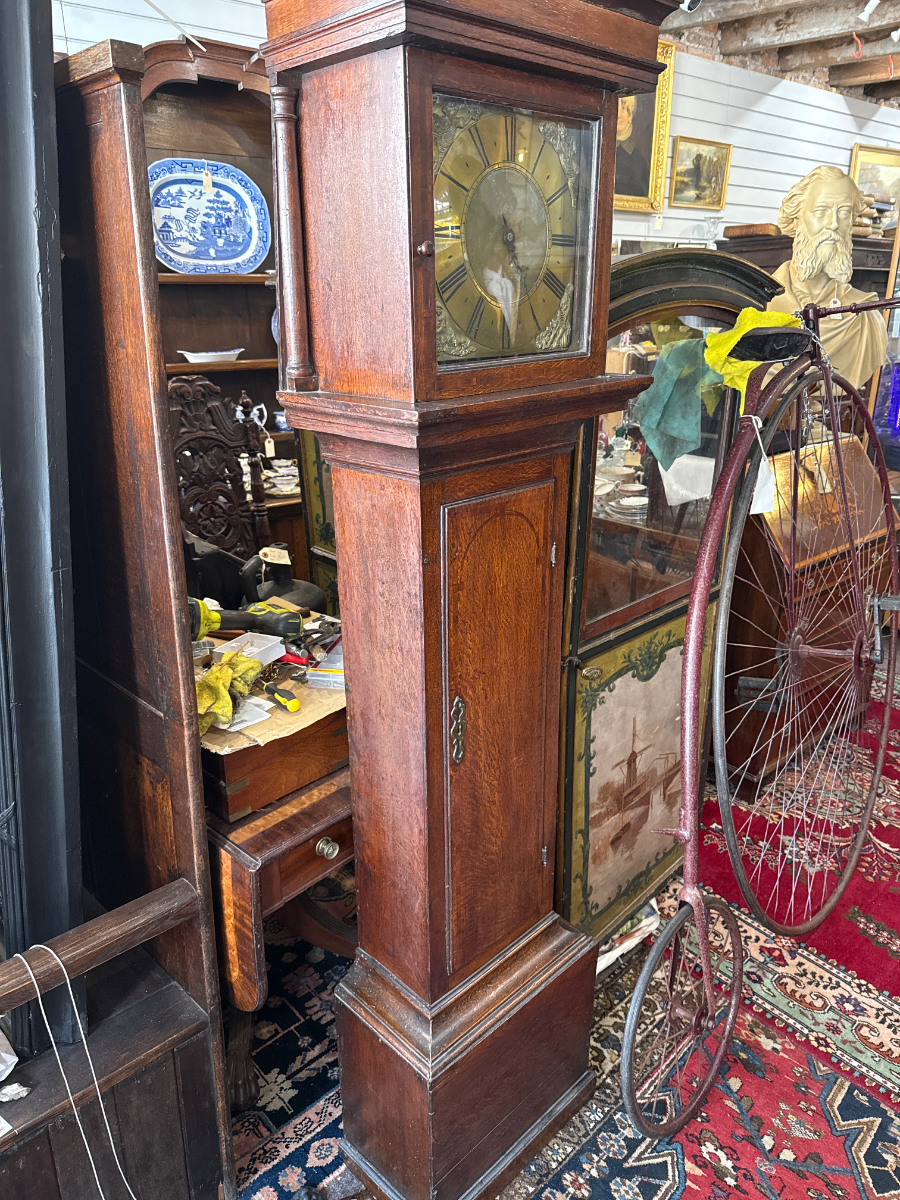
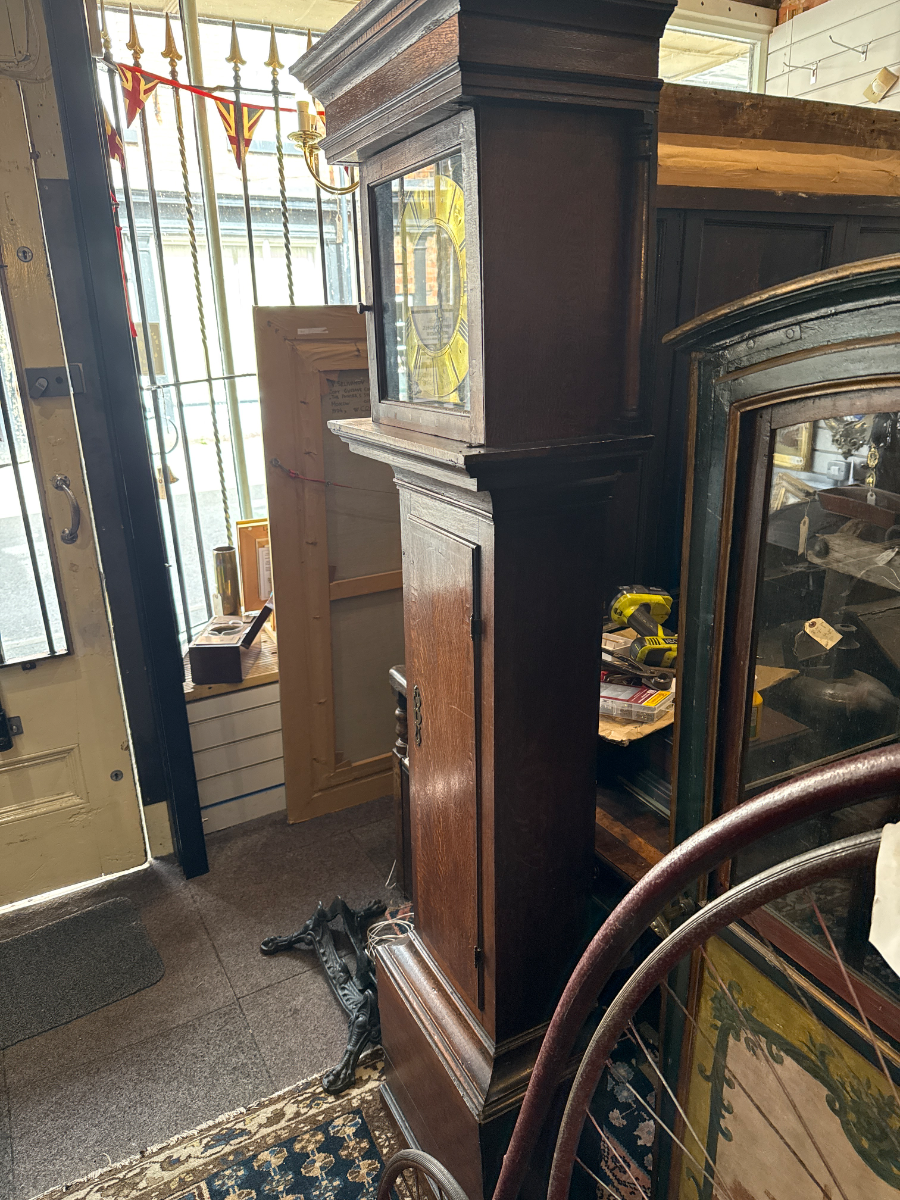
Tong Of Baddely 30 Hour Grandfather Clock
- Price: £400.00
- International buyers welcome — prices shown in GBP (£). Please enquire for equivalent USD ($) or EUR (€) rates.
There is no payment system built into this website. However, pressing the "reserve" button will prompt the seller to hold the item for one week, allowing for payment negotiation to be agreed upon and advise the selling party that a buyer is interested.
Please contact the
Seller
directly regarding postage.
International postage (including the United States) is available.
Collection Available
Interior Decoration Generator
Use our AI-powered visualisation tool to see how furniture and décor could look in your home. Upload a photo of your room and the system will place the selected item into the scene.
Experiment with interior design ideas before making a decision and see how pieces may work with your room’s space, lighting, and style.
A free account is required so we can securely process your images and save your visualisations for later comparison.
Images are generated using AI and are intended as a visual guide only. Colours, proportions, and placement may not be perfectly accurate.
Login/Create a free account to continue

Choose Up To 4 Antiques
Select a type, period, and item for each slot. Your AJAX-loaded item preview appears immediately, and the full room renders below when the user clicks generate. This visualisation is generated using AI and is intended as a guide only. Placement, scale, and appearance may not be 100% accurate.

Description 🔉
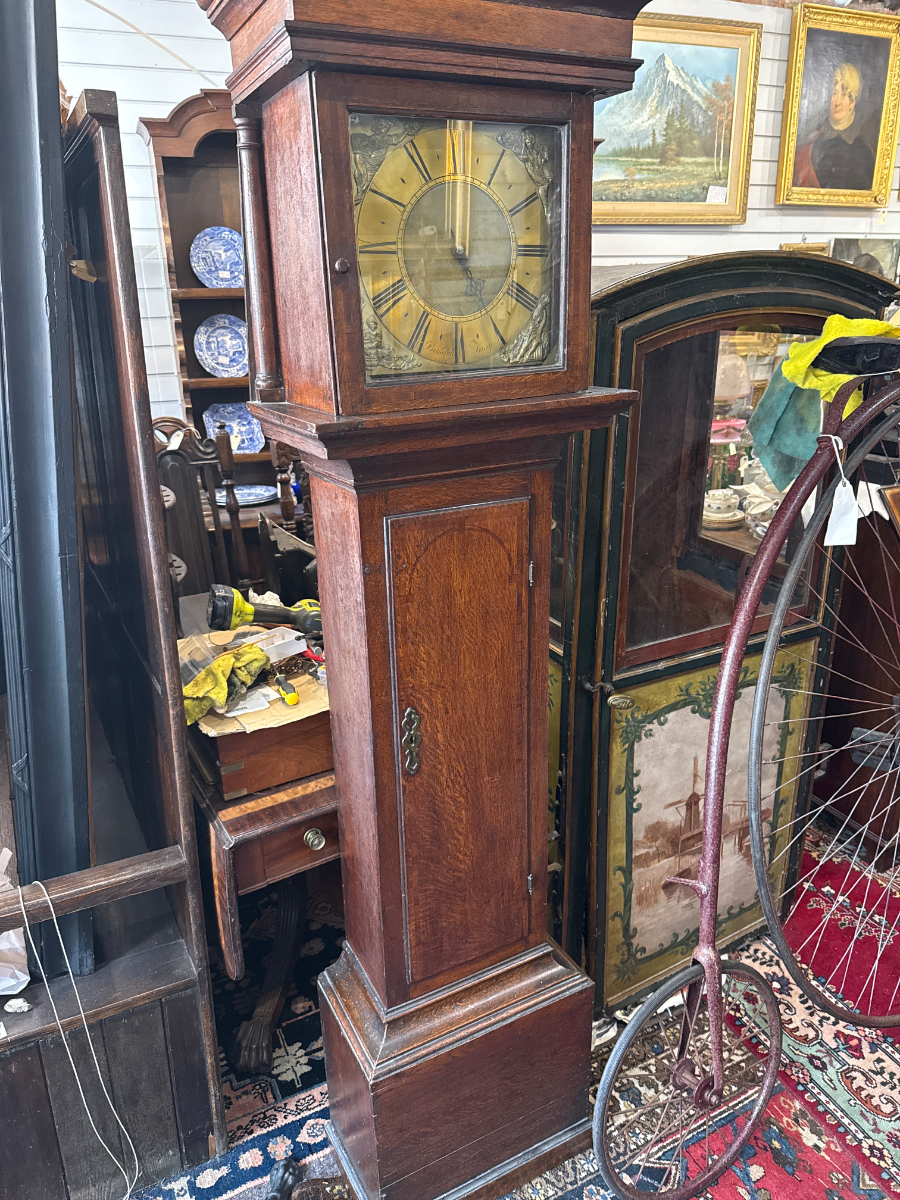
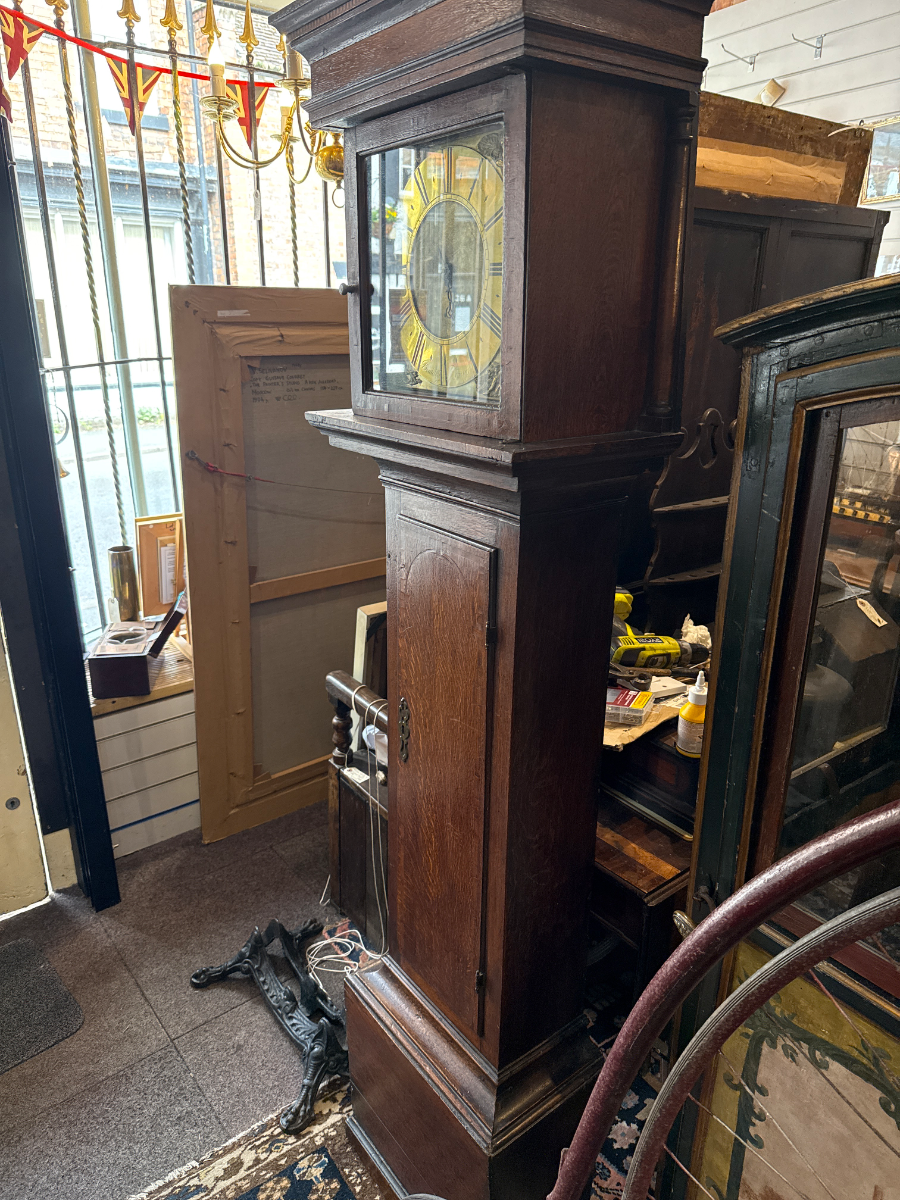
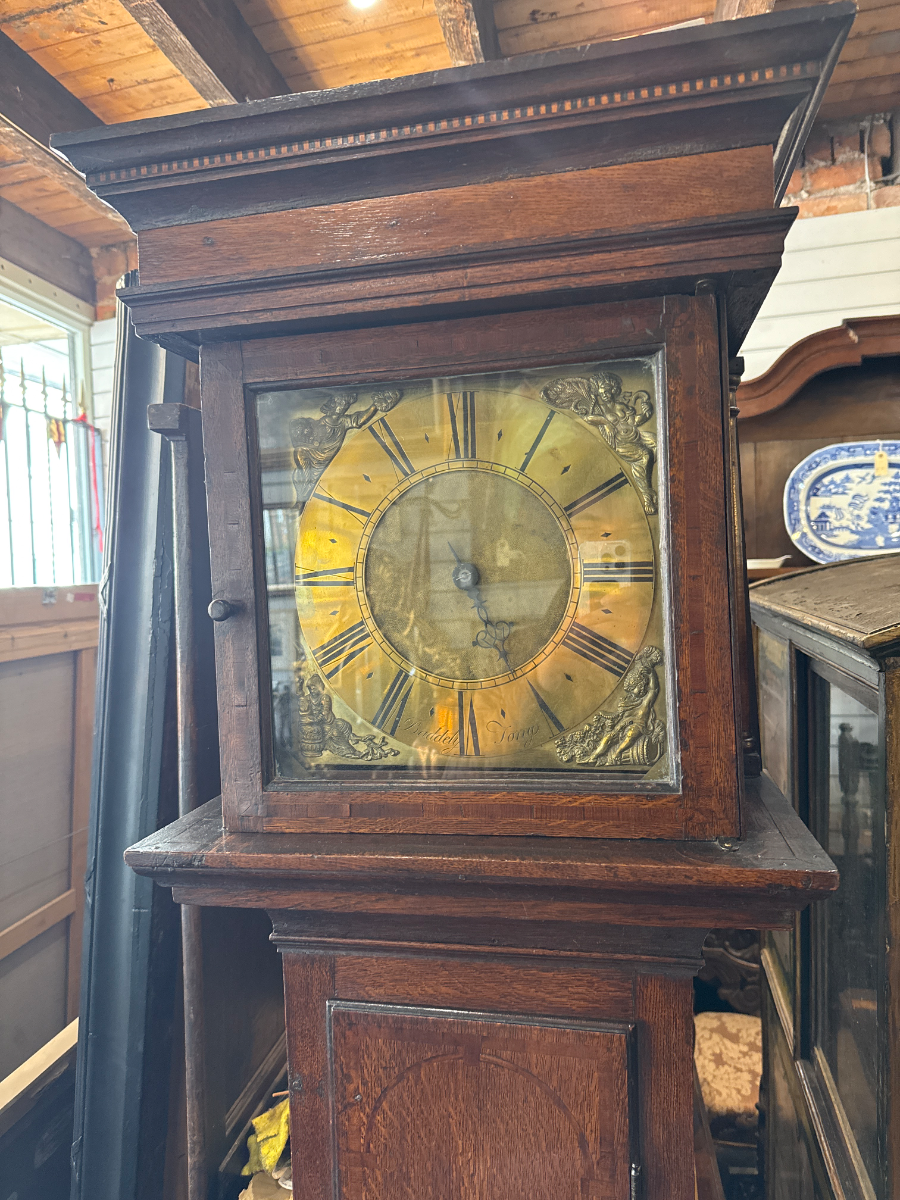
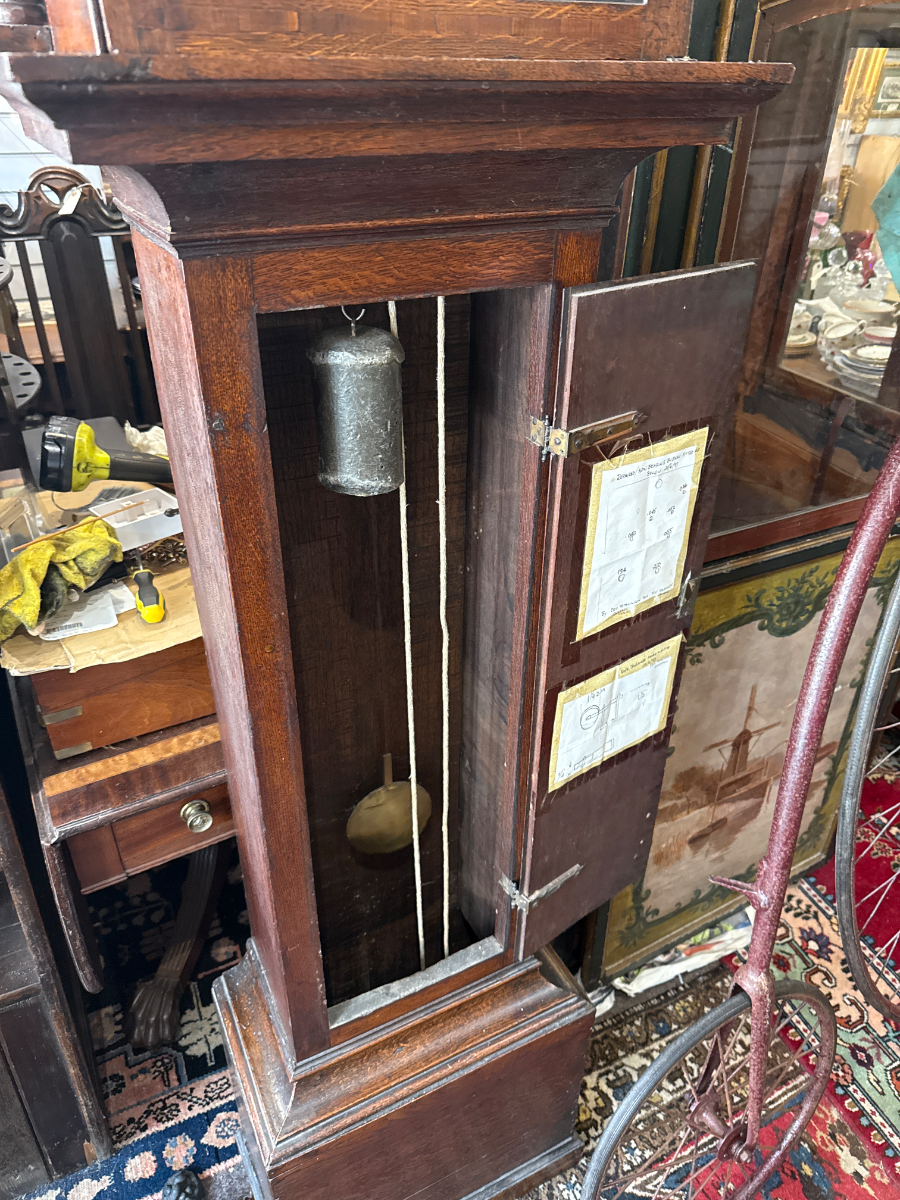
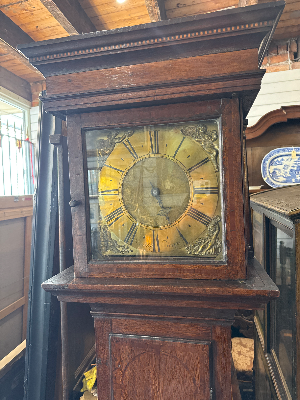
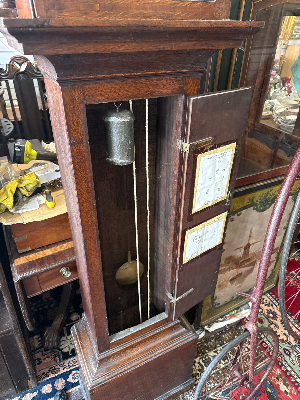
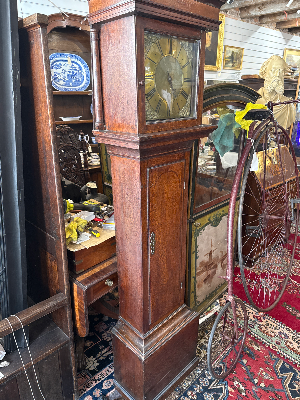
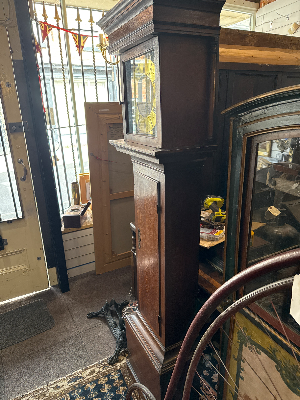
A lovely 30-hour rope-driven grandfather clock by the Shropshire maker “Baddeley of Tong,” believed to be the work of John Baddeley. Circa mid-18th century. Running perfectly.
## Clockmaker: John Baddeley (1727–1804)
John Baddeley (1727–1804) was one of the most distinguished provincial clockmakers of eighteenth-century England, working primarily at Tong and later at Albrighton. He belonged to the long-established Baddeley family of clock- and watchmakers whose reputation extended across the Midlands and Welsh border counties.
He was baptised at Tong on 20 September 1727, the son of George and Sarah Baddeley. Raised within an established horological family, John entered the clockmaking trade at an early age and developed into a highly accomplished mechanic, metalworker, and scientific craftsman.
During his early career he worked from Tong, where his forge stood behind The Bell. There he worked iron produced in nearby Shifnal into clock components and mechanisms, demonstrating that his workshop was involved not merely in assembling imported parts but in active mechanical manufacture. His clocks became well known throughout the region for their strength, reliability, and quality of workmanship.
John Baddeley’s reputation extended beyond domestic longcase clocks. He constructed the celebrated clock at St Bartholomew's Church, which continued operating until 1984, after which the mechanism was preserved and placed on display within the church. The survival and longevity of this turret clock stand as remarkable evidence of the durability and engineering quality of his work.
By the 1750s Baddeley had already established a substantial workshop and was taking apprentices. In 1751 Thomas Ore was apprenticed to him at Tong for a fee of £5; Ore later became an accomplished clockmaker in his own right. Other apprentices followed throughout the following decades, including Thomas Benbow (1756), Thomas Chorne Wilkes (1765), Joseph Tedd (1769), Richard Lloyd (1779), William Hartshorne (1783), Thomas Cooper (1784), William Edmunds (1786), and William Neale (1791). The number and continuity of apprentices illustrate the importance and success of the Baddeley workshop over many decades.
Baddeley was not solely a horologist but also a man deeply interested in science and mechanics. Around 1762 he began studying optics and constructed a reflective telescope. His scientific interests and mechanical expertise became widely respected, and he was reputedly associated with the Royal Society as well as regarded as a clockmaker to George III. His work reflects the important connection between practical provincial craftsmen and the broader scientific and industrial developments of eighteenth-century Britain.
On 10 July 1748 he married Martha Devey at Wombourne. Martha Devey had been baptised at Pattingham on 11 September 1718, the daughter of William and Sarah Devey. Their known children included Martha Baddeley (1752–1832), Anne Baddeley (1756–1834), and possibly a son Thomas baptised in 1757 who likely died young.
In 1766 Baddeley acquired Smethwick Manor in Staffordshire, a significant achievement demonstrating the prosperity and status he had attained through his trade and scientific pursuits. Around the same time he moved from Tong to Albrighton. The purchase of manorial property by a provincial craftsman was notable and illustrates the considerable financial success available to elite mechanical artisans during the Georgian period.
Following the death of his first wife, John married Jane Hale at Albrighton on 10 December 1768. Marriage allegations describe him as “John Baddeley the younger” of St Martin’s, Birmingham, Gentleman. Their son William was baptised in 1770 but likely died in infancy.
In 1771 Baddeley was living at Holloway Head in Birmingham, reflecting his continued connections with the expanding industrial and commercial world of the Midlands. By 1781 he had returned to Albrighton and jointly held the Manor of Smethwick with his brother George Baddeley, himself a clock- and watchmaker of Newport, Shropshire. After George’s death in 1785, shares in the manor passed to Samuel Smallwood and John Sillitoe, who jointly held interests alongside John Baddeley.
On 27 October 1774 John married Elizabeth Robinson at Lichfield St Mary. Elizabeth Robinson had been baptised at Tong on 9 November 1748, daughter of William and Elizabeth Robinson. Records suggest that John and Elizabeth had a natural son, John Baddeley of Wolverhampton, who also became a clock- and watchmaker.
John Baddeley died in January 1804 and was buried at Albrighton on 30 January 1804. His will, proved at Newport on 11 April 1804, valued his estate at approximately £600 and reveals extensive property holdings in Staffordshire and Warwickshire, including his share of the Manor of Smethwick and lands in Birmingham and Harborne.
The will also provides insight into the continuation of his trade and scientific interests. He bequeathed glass and metal grinding tools to his son John Baddeley of Wolverhampton, watch tools and materials to his grandson William Underhill, and remaining shop tools and stock-in-trade to Thomas Underhill. These references confirm that Baddeley remained actively engaged in clockmaking, metalworking, and optical instrument manufacture until late in life.
He was commemorated at Albrighton by an unusual cast-iron tomb bearing the inscription:
“His superiority as a clockmaker will be told for some years to come by the numerous domestic and turret clocks substantially constructed by him in every part of the country within many miles of Albrighton where he long resided.”
The inscription accurately reflects the enduring legacy of John Baddeley. He was far more than a provincial craftsman: he was an accomplished horologist, engineer, ironworker, scientific instrument maker, and one of the most important mechanical artisans working in the Midlands during the eighteenth century.
Frequently Asked Questions
When was the grandfather clock made?
Judging by the design and the clockmaker’s name, the grandfather clock is believed to date to around the 1750s, during John Baddeley’s earlier Tong period.
Who made the clock?
The grandfather clock is believed to have been made by John Baddeley, judging by the design of the case, the 30-hour rope-driven movement, and the signature “Baddeley of Tong,” which is consistent with his earlier Tong period work from the mid-eighteenth century.
What suggestions its an earlier rather than later clock?
What suggests this may be an earlier rather than later Baddeley clock is the fact that it is a 30-hour rope-driven design with a fairly provincial oak case, rather than the more refined and elegant mahogany cases associated with John Baddeley’s later Albrighton period. The simple square brass dial, restrained decoration, and practical country-made proportions are all characteristic of earlier mid-eighteenth century provincial clocks. The signature “Baddeley of Tong” also suggests manufacture during John Baddeley’s earlier Tong period, before his move to Albrighton around 1766, when his work became more sophisticated and ambitious.
Digital Shop Viewer
Seller Details
VISIT SELLERS SHOPTAKE SHOP TOUR
- Business Name: Raven Yard Antiques Shop
- Name: Jan
- Email: Enquiries@raven-antiques.com
- Phone: 07454992481
- Website: https://raven-antiques.com
- Address:
- 21 Watergate, Whitchurch, Shropshire, UK.
- SY131DP
- Interested in Seeing Other Antique Shops Nearby?
- Note:
- Raven Yard Antiques Shop is a family run business located in the picturesque part of Shropshire in the Roman town of Whitchurch. We have a diverse selection of rare and historic goods to choose from. Please browse our online store or else visit our shop to see some of our amazing items.
Legal Note
For antique firearms such as muskets and rifles, this item is offered strictly as a collectors’ piece. It is sold as a historic firearm for display or study purposes only, and not as a modern, live-firing weapon. Export, import, and ownership regulations vary by country; buyers are responsible for ensuring compliance with their local laws and confirming that they are not prohibited from ownership. In accordance with UK guidelines, the seller is required to verify the buyer’s identification and age prior to completion of the sale.
Newest Items.
SEE MORE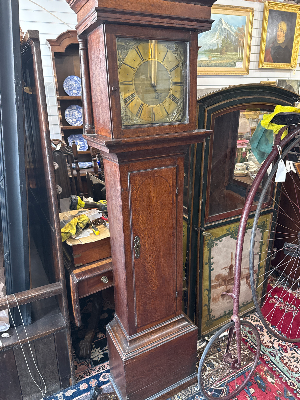
Product ID: 3636
Tong Of Baddely 30 Hour Grandfather Cloc..., For Sale
Buy It Now: £400.00
Product ID: 3630
Mid Victorian Tantalus With Decanters, For Sale
Buy It Now: £275.00
Product ID: 3622
WW1 Officers Private Purchase Adjustable..., For Sale
Buy It Now: £150.00
Product ID: 3621
WW2 Officers Bedroll, For Sale
Buy It Now: £125.00
Product ID: 3620
British 1903 Pattern Leather Bandolier, For Sale
Buy It Now: £125.00
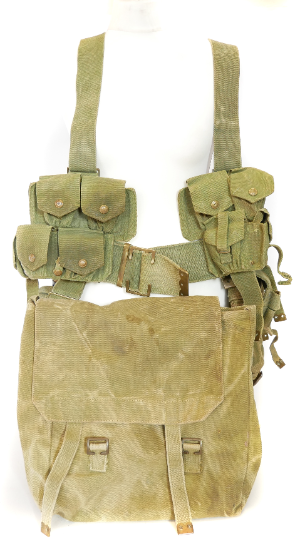
Product ID: 3619
Named 1908 Pattern Web Infantry Equipmen..., For Sale
Buy It Now: £695.00
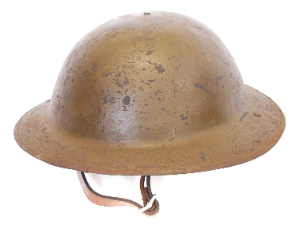
Product ID: 3618
Brodie Helmet, Steel, Mark I, Post 1917, For Sale
Buy It Now: £225.00
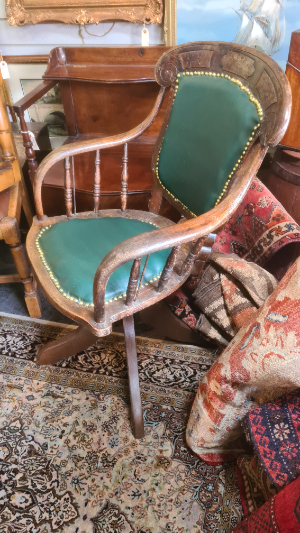
Product ID: 3617
Victorian Swivel Chair, For Sale
Buy It Now: £150.00