Article
Antique Firearms Guide How to Identify Muskets Flintlocks Blunderbusses
Posted on 26 March 2026 • by RavenYardAntiques
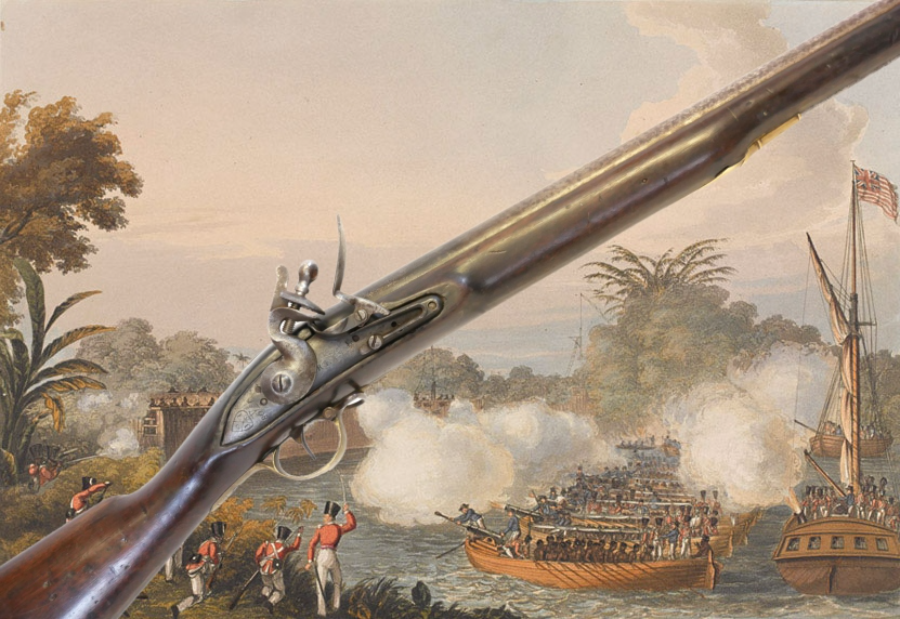
Antique firearms are among the most collectible historical objects, combining craftsmanship, military history, and long-term investment potential. Whether you’ve inherited an old musket, discovered a flintlock pistol, or are considering buying a blunderbuss, understanding how to properly identify and assess these pieces is essential.
Drawing on documented examples from historic collections such as the Rudolph J. Nunnemacher Collection of Projectile Arms (1928), this guide explains how to recognise, date, and value antique firearms with confidence.
Understanding Antique Firearm Types
The first step in identifying any antique firearm is determining its ignition system, as this directly indicates its age and type.
Flintlock Firearms (1600s–early 1800s)
Flintlocks are one of the most recognisable antique firearm types.
Key features:
Percussion Cap Firearms (1800s–1860s)
The percussion system replaced flintlocks in the early 19th century.
Key features:
Matchlock & Early Firearms (1400s–1600s)
Matchlocks represent some of the earliest true firearms.
Key features:
Blunderbusses (1700s–early 1800s)
Blunderbusses are among the most visually distinctive antique firearms.
Key features:
Understanding Markings: The Key to Identification
Markings are one of the most important factors when identifying and valuing antique firearms.
Look for:
What Makes an Antique Firearm Valuable?
Several factors determine the value of an antique firearm.
Original Condition
Original, untouched condition is critical. Firearms that have not been polished, refinished, or altered are significantly more desirable.
Matching Components
Collectors look for original lock, barrel, and stock from the same period, without mismatched parts.
Rarity
Higher-value categories include early flintlocks, blunderbusses, military contract muskets, and unusual or transitional mechanisms.
Historical Relevance
Firearms linked to major historical periods, such as the American Civil War, tend to attract strong interest.
What Reduces Value
Common issues that lower value include:
How to Date an Antique Firearm
A simple way to estimate age is by ignition type:
Matchlock – Pre-1650
Flintlock – 1650–1830
Percussion cap – 1820–1865
Cartridge firearms – Post-1860
This provides a quick starting point before deeper analysis.
Are Antique Firearms a Good Investment?
Antique firearms remain a strong collecting category due to limited supply, consistent demand, and historical significance.
Well-preserved examples, particularly flintlocks, blunderbusses, and military muskets with clear markings, continue to perform well in the market.
Why Museum Collections Still Matter
Historic catalogues such as the Nunnemacher Collection remain relevant because they document original, unaltered examples. These records are still used by collectors and dealers to compare form, verify markings, and understand authenticity.
Need Help Identifying or Valuing an Antique Firearm?
If you own an antique firearm or are considering buying or selling one, professional guidance can make a significant difference.
At The Antique Stores, we regularly identify antique firearms, provide valuations, and assist with buying and selling.
Contact us today for expert advice on your antique firearm.
Drawing on documented examples from historic collections such as the Rudolph J. Nunnemacher Collection of Projectile Arms (1928), this guide explains how to recognise, date, and value antique firearms with confidence.
Understanding Antique Firearm Types
The first step in identifying any antique firearm is determining its ignition system, as this directly indicates its age and type.
Flintlock Firearms (1600s–early 1800s)
Flintlocks are one of the most recognisable antique firearm types.
Key features:
- Hammer holding a flint
- Steel striking plate (frizzen)
- External flash pan
Percussion Cap Firearms (1800s–1860s)
The percussion system replaced flintlocks in the early 19th century.
Key features:
- Small nipple where a percussion cap is placed
- No flash pan
- More reliable ignition system
Matchlock & Early Firearms (1400s–1600s)
Matchlocks represent some of the earliest true firearms.
Key features:
- Burning match cord used for ignition
- Simple mechanical trigger
- Often long barrels and regional styling
Blunderbusses (1700s–early 1800s)
Blunderbusses are among the most visually distinctive antique firearms.
Key features:
- Flared muzzle
- Short barrel
- Designed for close-range defence
Understanding Markings: The Key to Identification
Markings are one of the most important factors when identifying and valuing antique firearms.
Look for:
- Maker’s names (e.g. Springfield, Remington, London gunmakers)
- Proof marks (British, Belgian, European)
- Dates stamped on the lock or barrel
- Government ownership marks (e.g. U.S. eagle, naval anchors)
- “U.S. Springfield 1863”
- Eagle inspection stamps
- Letters such as “V” and “P”
What Makes an Antique Firearm Valuable?
Several factors determine the value of an antique firearm.
Original Condition
Original, untouched condition is critical. Firearms that have not been polished, refinished, or altered are significantly more desirable.
Matching Components
Collectors look for original lock, barrel, and stock from the same period, without mismatched parts.
Rarity
Higher-value categories include early flintlocks, blunderbusses, military contract muskets, and unusual or transitional mechanisms.
Historical Relevance
Firearms linked to major historical periods, such as the American Civil War, tend to attract strong interest.
What Reduces Value
Common issues that lower value include:
- Sanded or refinished wood
- Replaced or modernised parts
- Artificial ageing or reproduction pieces
- Poor or incorrect restorations
How to Date an Antique Firearm
A simple way to estimate age is by ignition type:
Matchlock – Pre-1650
Flintlock – 1650–1830
Percussion cap – 1820–1865
Cartridge firearms – Post-1860
This provides a quick starting point before deeper analysis.
Are Antique Firearms a Good Investment?
Antique firearms remain a strong collecting category due to limited supply, consistent demand, and historical significance.
Well-preserved examples, particularly flintlocks, blunderbusses, and military muskets with clear markings, continue to perform well in the market.
Why Museum Collections Still Matter
Historic catalogues such as the Nunnemacher Collection remain relevant because they document original, unaltered examples. These records are still used by collectors and dealers to compare form, verify markings, and understand authenticity.
Need Help Identifying or Valuing an Antique Firearm?
If you own an antique firearm or are considering buying or selling one, professional guidance can make a significant difference.
At The Antique Stores, we regularly identify antique firearms, provide valuations, and assist with buying and selling.
Contact us today for expert advice on your antique firearm.