Article
A Short Study of WW1 Brodie Helmets Simplified
Posted on 17 April 2026 • by RavenYardAntiques
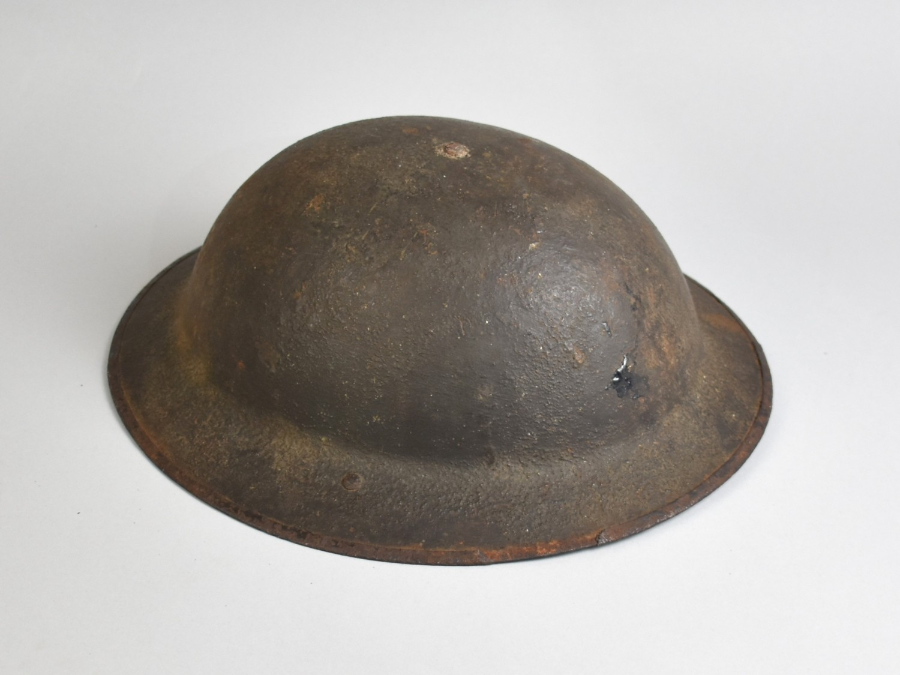
Keeping track of early Brodie steel helmet development can be confusing, as wartime changes were introduced rapidly and nomenclature often overlapped. The following is a simplified and practical guide to the main stages of evolution.
1915 – The Original Rimless War Office Pattern
In 1915 the British Army recognised the urgent need for what were commonly described as “shrapnel helmets” for troops serving on the Western Front. John Leopold Brodie submitted the pressed steel helmet design that would become standard British head protection.
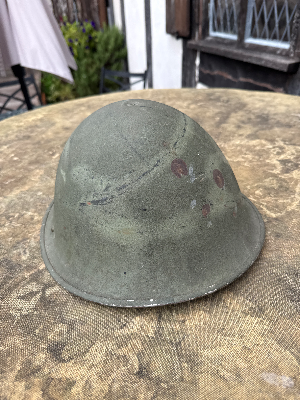
The first production helmets, officially known as the Brodie's Steel Helmet War Office Pattern, began delivery in late 1915. These early helmets were rimless, with a simple liner and chinstrap arrangement. Many of the earliest examples were produced in magnetic mild steel, now often referred to by collectors as Type A.
Late 1915 to Early 1916 – Hadfield Steel Introduced
Ballistic trials soon showed that Hadfields Ltd manganese steel offered superior toughness and resistance to shell fragments compared with mild steel. As a result, production increasingly shifted toward non-magnetic manganese steel shells, commonly called Type B by collectors.
The move to non-magnetic steel was due to protection and durability, not compass interference, a myth often repeated.
Spring 1916 – Rimmed Transitional Helmets
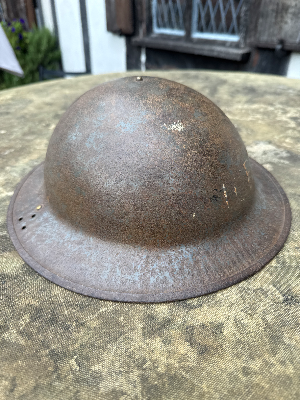
In spring 1916 the pattern was revised with the addition of a rolled steel rim around the shell edge, improving strength and reducing sharp unfinished edges. A redesigned liner and chinstrap arrangement were also introduced.
During this transition, some helmets were still produced in magnetic steel, meaning rimmed magnetic examples survive today and are scarcer than later manganese-steel helmets. These early rimmed magnetic helmets are an important intermediary stage between the first rimless 1915 helmets and later standardised production.
September 1916 – Helmet, Steel, Mk I
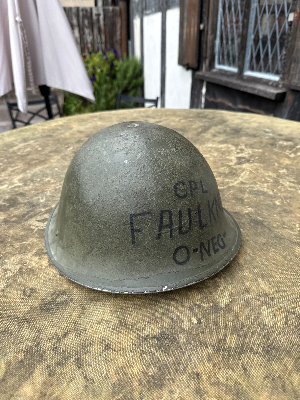
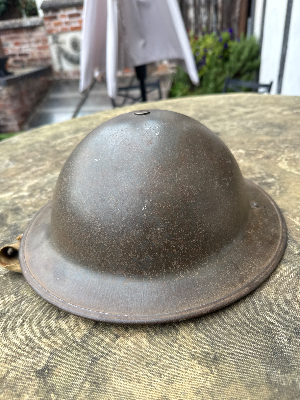
By late 1916 the revised rimmed helmet became standardised under the designation Helmet, Steel, Mark I. This became the principal British combat helmet of the First World War and remained in widespread service afterward.
Typical Mk I features include:
Rolled rim
One-piece pressed shell
Improved liner retained by a central fixing
Chinstrap lugs at the sides
1917–1918 – Refinements
Further liner improvements followed during the war, including rubber cushioning rings and minor manufacturing variations. Numerous contractors supplied shells, steel, liners, and fittings, resulting in many maker-mark combinations.
Interwar Years – Refurbishment
Large numbers of WW1 shells remained serviceable after 1918 and were refurbished during the 1930s with updated liners, chinstraps, and fittings. Many collectors refer to these rebuilt helmets as Mk I* examples.
Early WW2 Service
Refurbished WW1 Brodies continued to see use in the early years of the Second World War before being replaced by newer patterns such as the Mk II steel helmet.
1915 – The Original Rimless War Office Pattern
In 1915 the British Army recognised the urgent need for what were commonly described as “shrapnel helmets” for troops serving on the Western Front. John Leopold Brodie submitted the pressed steel helmet design that would become standard British head protection.
The first production helmets, officially known as the Brodie's Steel Helmet War Office Pattern, began delivery in late 1915. These early helmets were rimless, with a simple liner and chinstrap arrangement. Many of the earliest examples were produced in magnetic mild steel, now often referred to by collectors as Type A.
Late 1915 to Early 1916 – Hadfield Steel Introduced
Ballistic trials soon showed that Hadfields Ltd manganese steel offered superior toughness and resistance to shell fragments compared with mild steel. As a result, production increasingly shifted toward non-magnetic manganese steel shells, commonly called Type B by collectors.
The move to non-magnetic steel was due to protection and durability, not compass interference, a myth often repeated.
Spring 1916 – Rimmed Transitional Helmets
In spring 1916 the pattern was revised with the addition of a rolled steel rim around the shell edge, improving strength and reducing sharp unfinished edges. A redesigned liner and chinstrap arrangement were also introduced.
During this transition, some helmets were still produced in magnetic steel, meaning rimmed magnetic examples survive today and are scarcer than later manganese-steel helmets. These early rimmed magnetic helmets are an important intermediary stage between the first rimless 1915 helmets and later standardised production.
September 1916 – Helmet, Steel, Mk I
By late 1916 the revised rimmed helmet became standardised under the designation Helmet, Steel, Mark I. This became the principal British combat helmet of the First World War and remained in widespread service afterward.
Typical Mk I features include:
Rolled rim
One-piece pressed shell
Improved liner retained by a central fixing
Chinstrap lugs at the sides
1917–1918 – Refinements
Further liner improvements followed during the war, including rubber cushioning rings and minor manufacturing variations. Numerous contractors supplied shells, steel, liners, and fittings, resulting in many maker-mark combinations.
Interwar Years – Refurbishment
Large numbers of WW1 shells remained serviceable after 1918 and were refurbished during the 1930s with updated liners, chinstraps, and fittings. Many collectors refer to these rebuilt helmets as Mk I* examples.
Early WW2 Service
Refurbished WW1 Brodies continued to see use in the early years of the Second World War before being replaced by newer patterns such as the Mk II steel helmet.