ID: 3688
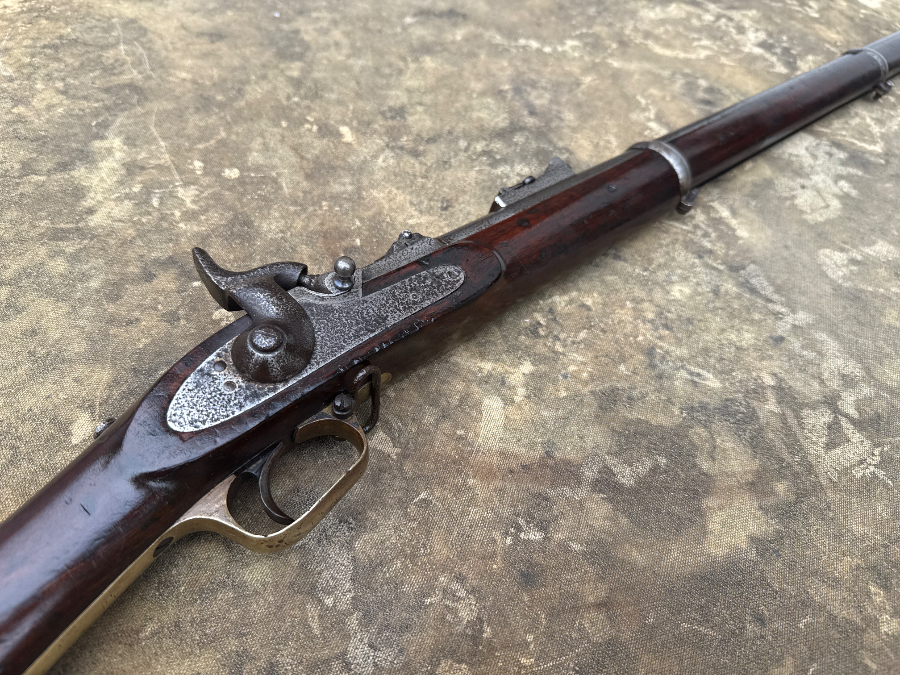
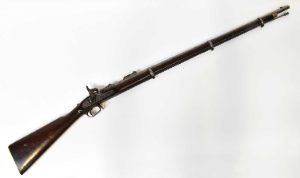
Mont Storm .577 Breechloading Rifle
This item has been purchased.
Interior Decoration Generator
Use our AI-powered visualisation tool to see how furniture and décor could look in your home. Upload a photo of your room and the system will place the selected item into the scene.
Experiment with interior design ideas before making a decision and see how pieces may work with your room’s space, lighting, and style.
A free account is required so we can securely process your images and save your visualisations for later comparison.
Images are generated using AI and are intended as a visual guide only. Colours, proportions, and placement may not be perfectly accurate.
Login/Create a free account to continue

Choose Up To 4 Antiques
Select a type, period, and item for each slot. Your AJAX-loaded item preview appears immediately, and the full room renders below when the user clicks generate. This visualisation is generated using AI and is intended as a guide only. Placement, scale, and appearance may not be 100% accurate.

Description 🔉
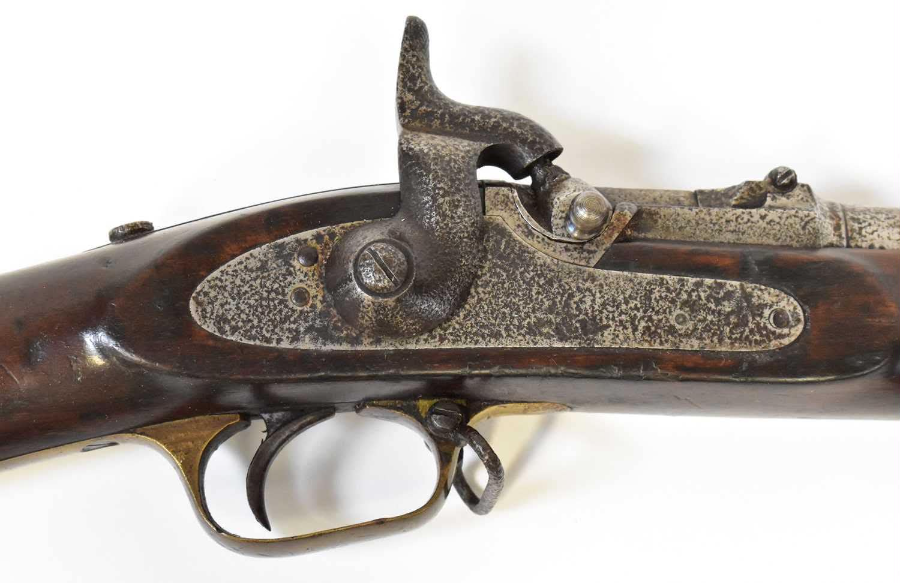
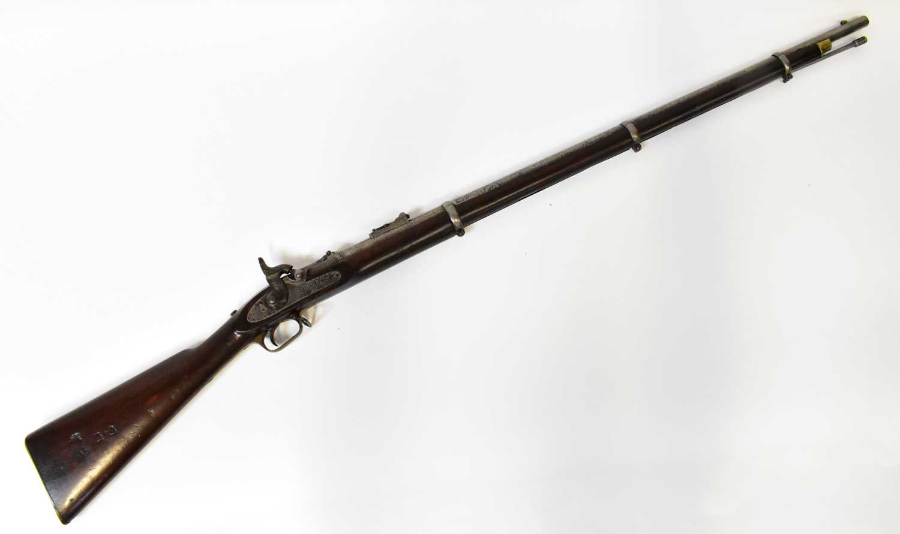
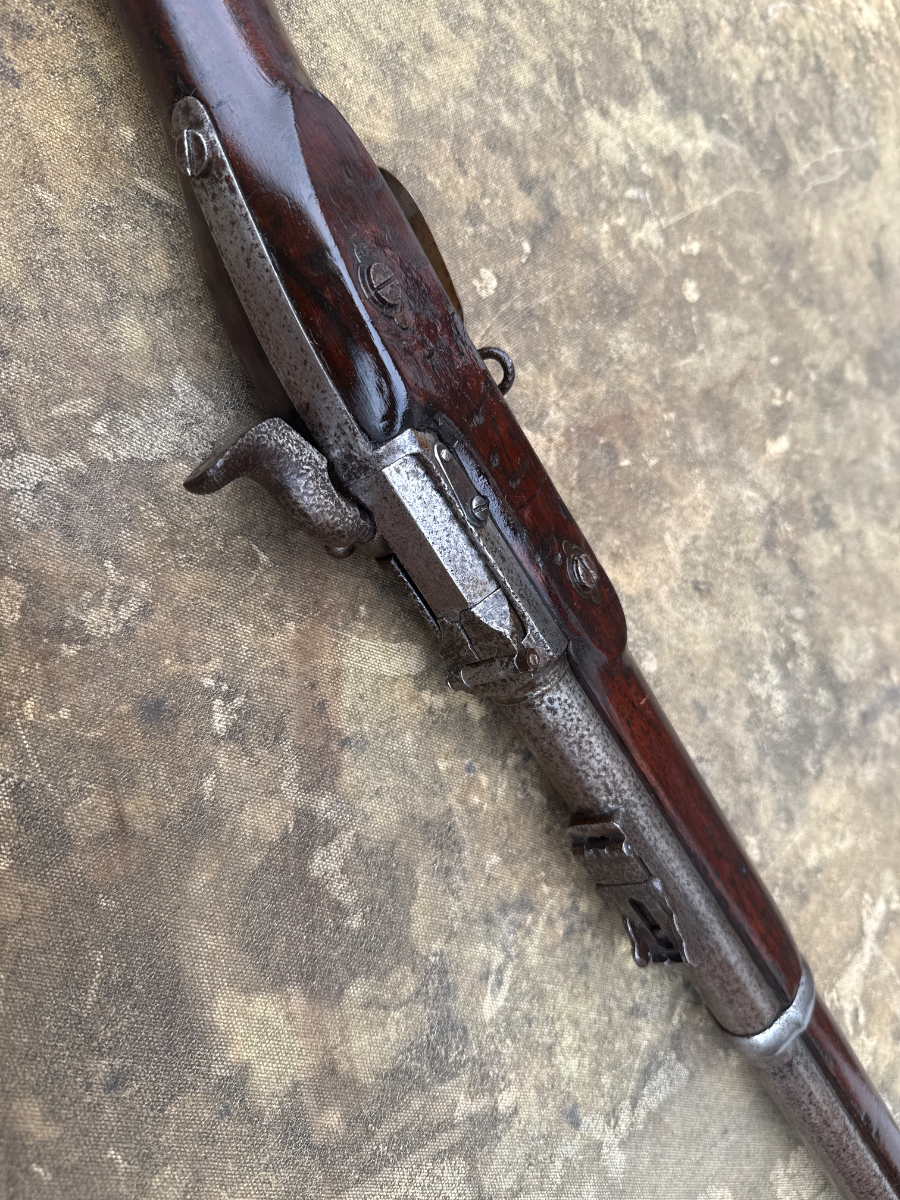
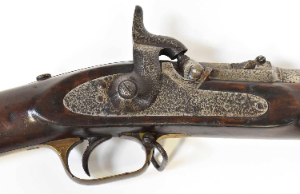
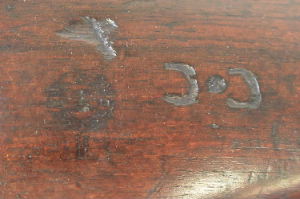
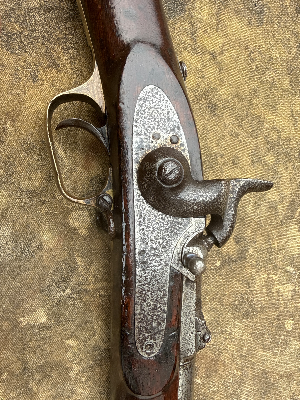
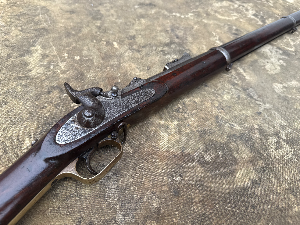
This particular example is a two-band .577-calibre Enfield rifle with a 30-inch barrel rifled. It is fitted with a ladder rear sight and a bayonet lug at the muzzle and is iron-mounted in a full-length walnut stock. Externally it retains much of the familiar appearance of the Enfield rifle from which it was converted, with the principal difference becoming apparent on examining the breech.
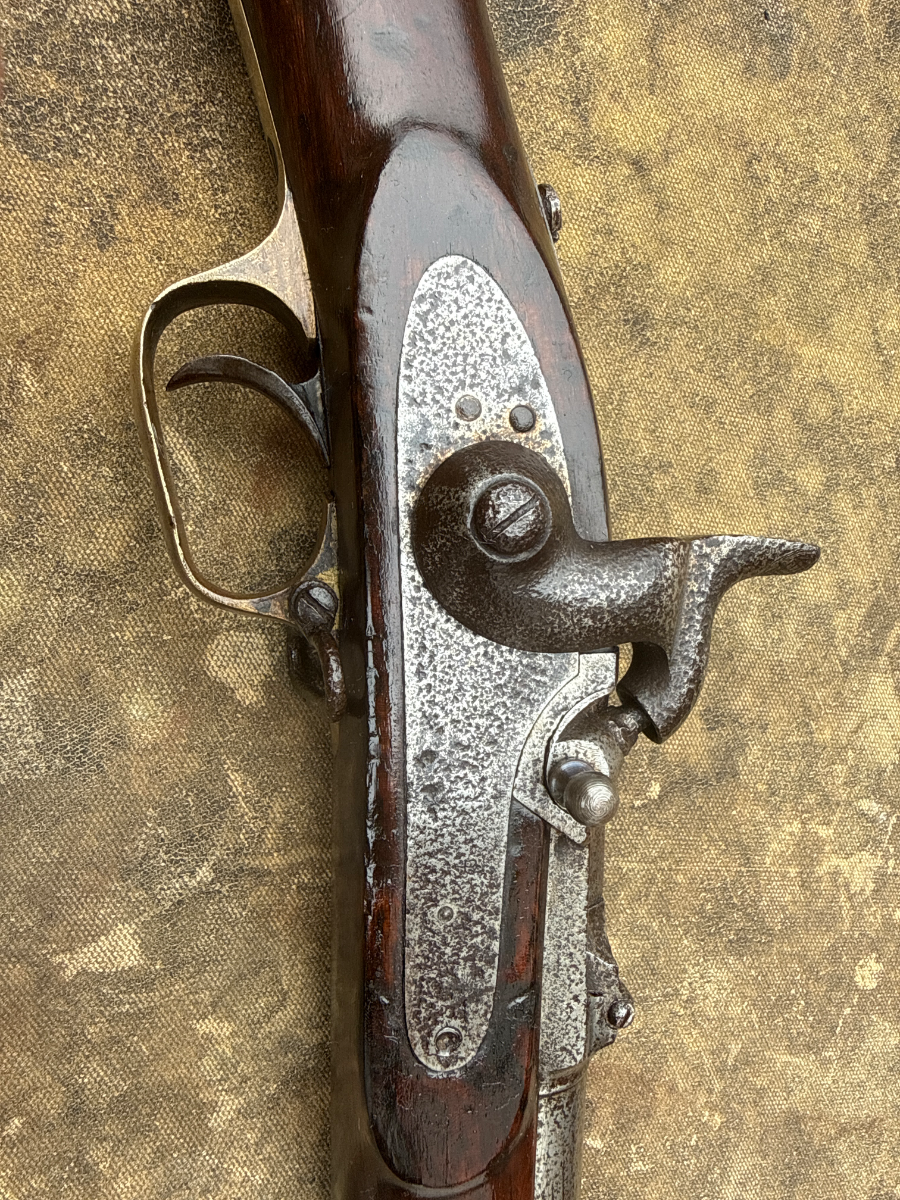
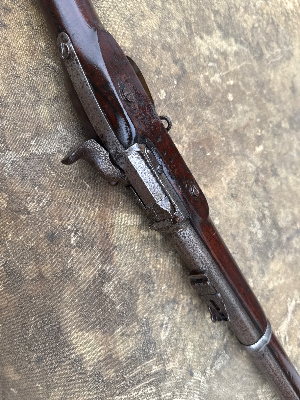
The hammer retains the conventional three positions of the percussion Enfield: full cock, half cock and lowered onto the nipple. A distinctive safety feature of the Mont Storm mechanism is that the breech can only be opened when the hammer is at full cock. Opening it exposes the hinged chamber and the characteristic Mont Storm loading arrangement.
The removable thimble survives with the rifle and provides a particularly useful illustration of how the gas-sealing system operated. When removed, the internal ridge upon which it seats can be seen inside the mouth of the chamber. When installed and the breech closed, the thimble occupies the junction between the chamber and the bore, where expansion upon firing was intended to produce the necessary gas seal. The rifle shows evidence of considerable period use and retains the principal features that distinguish the Mont Storm conversion.
History:
The Montgomery Storm breech-loading rifle designed by American inventor William Montgomery Storm represents one of the more unusual transitional British military firearms of the 1860s, developed during the search for a practical means of converting the large stocks of existing muzzle-loading Enfield rifles into breech-loaders. Rather than requiring the Army to replace its Enfields entirely, Mont Storm's system adapted the familiar percussion rifle by incorporating a hinged breech mechanism while retaining the existing hammer, nipple and percussion-cap ignition.
The system was applied to rifles of the Pattern 1853 Enfield family and was intended to provide the advantages of breech-loading without abandoning the established percussion system. Contemporary descriptions praised the conversion for its comparative simplicity. The breech was opened by operating a hinged chamber, allowing a cartridge to be inserted from the rear. The rifle could consequently be loaded considerably more rapidly than a conventional muzzle-loader and, importantly for military purposes, could be loaded while the soldier remained prone or behind cover.
The Mont Storm used a distinctive animal-gut cartridge rather than the metallic self-contained cartridges that would soon become standard. The cartridge contained the powder charge with the bullet projecting from its forward end. With the hammer at full cock, the breech could be opened and the cartridge inserted into the chamber so that its rear rested against the back of the chamber while the bullet initially projected rearwards towards the firer. As the hinged breech was swung closed, the nose of the cartridge was guided into alignment with the bore. A conventional percussion cap was then placed upon the nipple and the rifle fired using the existing Enfield lock.
An important feature of the Mont Storm system was the removable component contemporary accounts describe as the "thimble." This consisted of a short metal cylinder, open at both ends, positioned at the forward end of the chamber and resting against an internal shoulder or ridge. Upon firing, the thimble was intended to expand under gas pressure and seal the junction between the chamber and barrel, thereby reducing the escape of propellant gases through the breech. Contemporary descriptions specifically noted this arrangement as an important part of the system and praised the breech for being comparatively secure against gas leakage.
Period reports were initially enthusiastic about the design. An 1863 account of trials involving Mont Storm rifles described the breech-loading arrangement as simple and rapid to operate and noted that competitors achieved substantially higher rates of fire than were normally possible with muzzle-loading arms. The report also emphasized one of the tactical advantages then attracting considerable attention: a soldier using a breech-loader could reload without standing upright and exposing himself to enemy fire. Contemporary writers regarded this as potentially as important as the increase in rate of fire itself.
When Britain began seriously considering the replacement or conversion of its muzzle-loading Enfields, numerous breech-loading systems were examined. Considerable debate surrounded not only accuracy and rate of fire but also the relative merits of traditional percussion ignition and the emerging self-contained metallic cartridge. Cost was another major consideration. Converting the enormous quantity of Enfields already in service offered obvious financial advantages over equipping the entire Army with an entirely new rifle.
The Snider conversion was among the systems considered, although its early performance was affected by ammunition that had not yet been fully developed. For a period the Mont Storm system appeared sufficiently promising for orders to be placed. Its attraction lay partly in the fact that it represented a relatively straightforward conversion and retained much of the existing Enfield mechanism. Furthermore, a Mont Storm-converted rifle could still be used as a conventional muzzle-loader with the standard Enfield service cartridge if necessary.
Its principal weakness, however, was its ammunition. The animal-gut cartridge proved comparatively fragile and complicated to manufacture, limiting the practicality of an otherwise ingenious conversion. In addition, there was the risk of pointing the bullet to the firer when loading. At the same time, continued development of the Snider rifle and its metallic cartridge addressed many of the problems encountered during the earlier trials. The advantages of the more robust self-contained cartridge ultimately outweighed those of the Mont Storm arrangement, and the Snider system was adopted while the Mont Storm conversion was abandoned. Surviving Mont Storm rifles are consequently uncommon reminders of this brief experimental period between the percussion muzzle-loader and the metallic-cartridge breech-loader.
Frequently Asked Questions
Who invented the Mont Storm Rifle?
William Montgomery Storm who was born August 2, 1826, in New York. He was an American inventor known for holding over 30 patents, primarily related to breechloading firearms and the Mont Storm system.
How many Mont Storm Rifles were made?
Exact figures are unknown but estimates suggest 3000 were converted for the British military and an additional 400 for Harpers Ferry. Some were exported elsewhere.
Digital Shop Viewer
Seller Details
VISIT SELLERS SHOPTAKE SHOP TOUR
- Business Name: Raven Yard Antiques Shop
- Name: Jan
- Email: Enquiries@raven-antiques.com
- Phone: 07454992481
- Website: https://raven-antiques.com
- Address:
- 21 Watergate, Whitchurch, Shropshire, UK.
- SY131DP
- Interested in Seeing Other Antique Shops Nearby?
- Note:
- Raven Yard Antiques Shop is a family run business located in the picturesque part of Shropshire in the Roman town of Whitchurch. We have a diverse selection of rare and historic goods to choose from. Please browse our online store or else visit our shop to see some of our amazing items.
Legal Note
For antique firearms such as muskets and rifles, this item is offered strictly as a collectors’ piece. It is sold as a historic firearm for display or study purposes only, and not as a modern, live-firing weapon. Export, import, and ownership regulations vary by country; buyers are responsible for ensuring compliance with their local laws and confirming that they are not prohibited from ownership. In accordance with UK guidelines, the seller is required to verify the buyer’s identification and age prior to completion of the sale. By purchasing antique weapons, the buyer is also consenting that they are not on a prohibited person register.
Newest Items.
SEE MORE
Product ID: 8810
A Large Mary Gregory Green Vase, For Sale
Buy It Now: £45.00
Product ID: 8809
A Large Mary Gregory Green Vase, For Sale
Buy It Now: £45.00
Product ID: 8808
A Mary Gregory Amethyst Vase With 2 Hand..., For Sale
Buy It Now: £50.00
Product ID: 8807
A Large Mary Gregory Cranberry Glass Vas..., For Sale
Buy It Now: £45.00
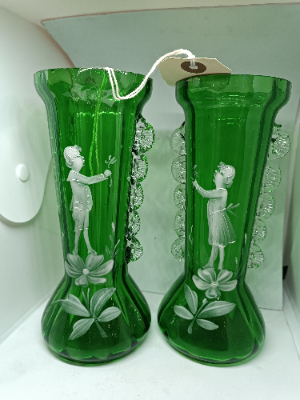
Product ID: 8806
A Pair Of Mary Gregory Green Vases, For Sale
Buy It Now: £30.00
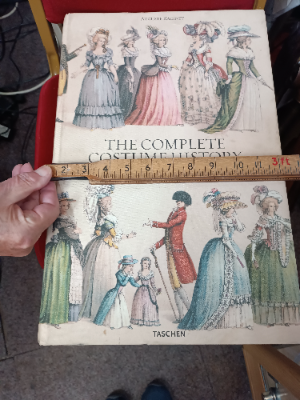
Product ID: 8805
A Very Large The Complete Costume Histor..., For Sale
Buy It Now: £300.00
Product ID: 8804
An Oil Painting Of Great Eastern Ship On..., For Sale
Buy It Now: £130.00
Product ID: 8803
A Medium Size Cast Iron Cauldron, For Sale
Buy It Now: £100.00