ID: 3482
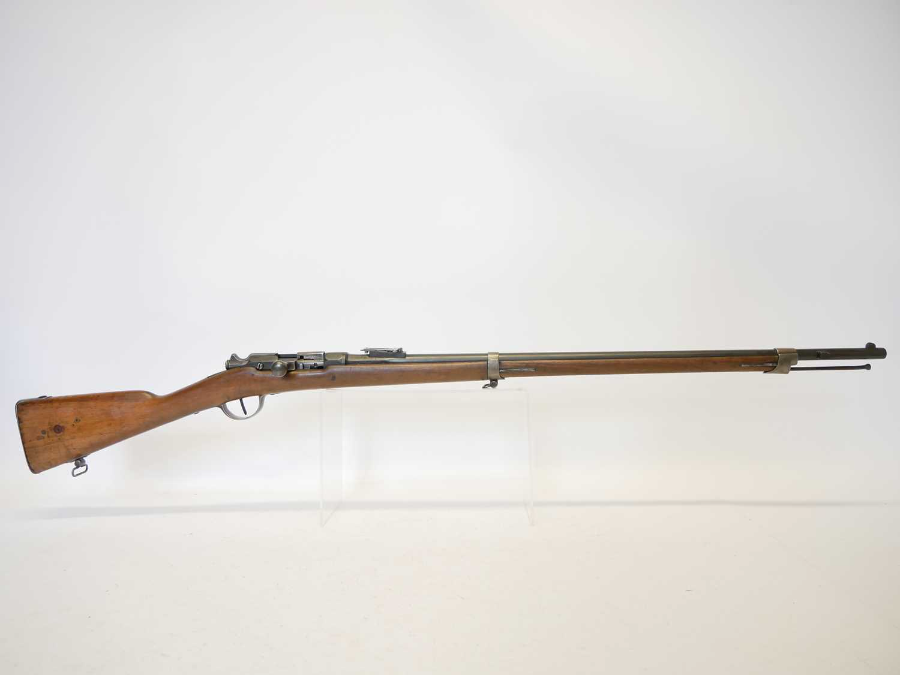
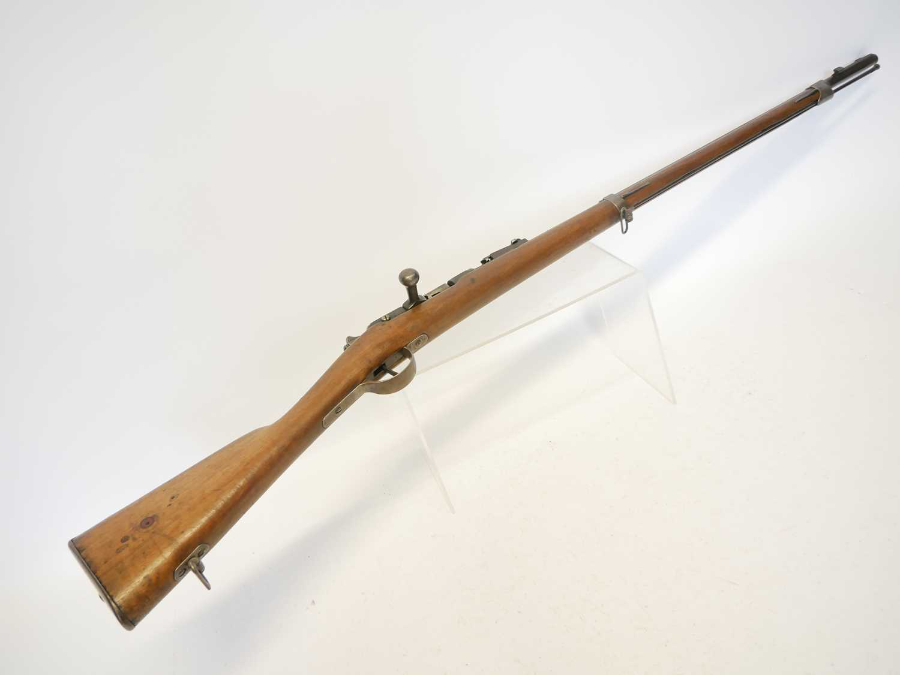
French Gras 11mm Bolt Action Rifle M1874 With Bayonet
- Price: £1500.00
- International buyers welcome — prices shown in GBP (£). Please enquire for equivalent USD ($) or EUR (€) rates.
There is no payment system built into this website. However, pressing the "reserve" button will prompt the seller to hold the item for one week, allowing for payment negotiation to be agreed upon and advise the selling party that a buyer is interested.
Please contact the
Seller
directly regarding postage.
International postage (including the United States) is available.
Collection Available
Interior Decoration Generator
Use our AI-powered visualisation tool to see how furniture and décor could look in your home. Upload a photo of your room and the system will place the selected item into the scene.
Experiment with interior design ideas before making a decision and see how pieces may work with your room’s space, lighting, and style.
A free account is required so we can securely process your images and save your visualisations for later comparison.
Images are generated using AI and are intended as a visual guide only. Colours, proportions, and placement may not be perfectly accurate.
Login/Create a free account to continue

Choose Up To 4 Antiques
Select a type, period, and item for each slot. Your AJAX-loaded item preview appears immediately, and the full room renders below when the user clicks generate. This visualisation is generated using AI and is intended as a guide only. Placement, scale, and appearance may not be 100% accurate.

Description 🔉
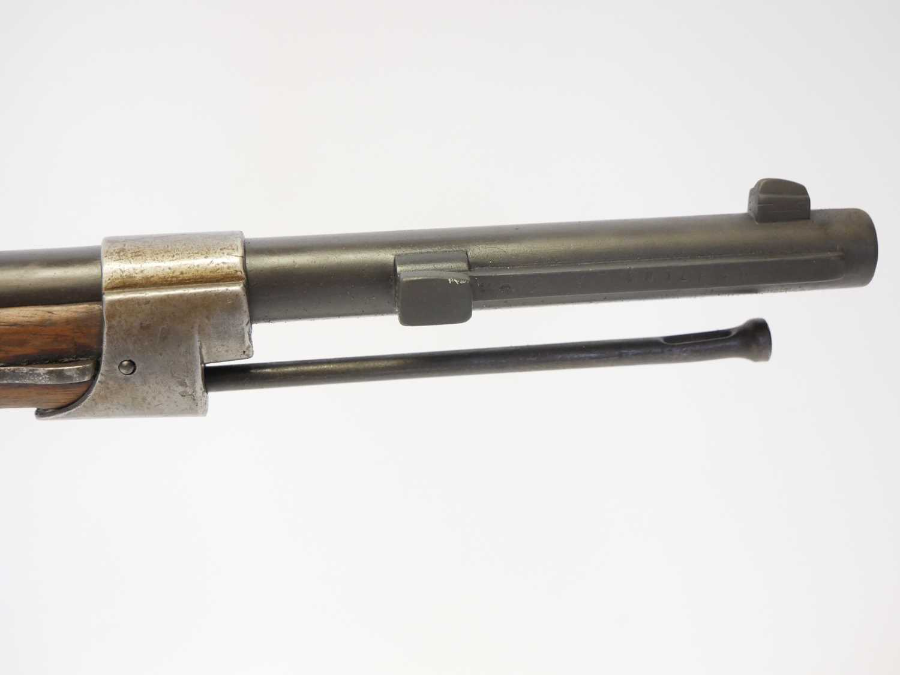
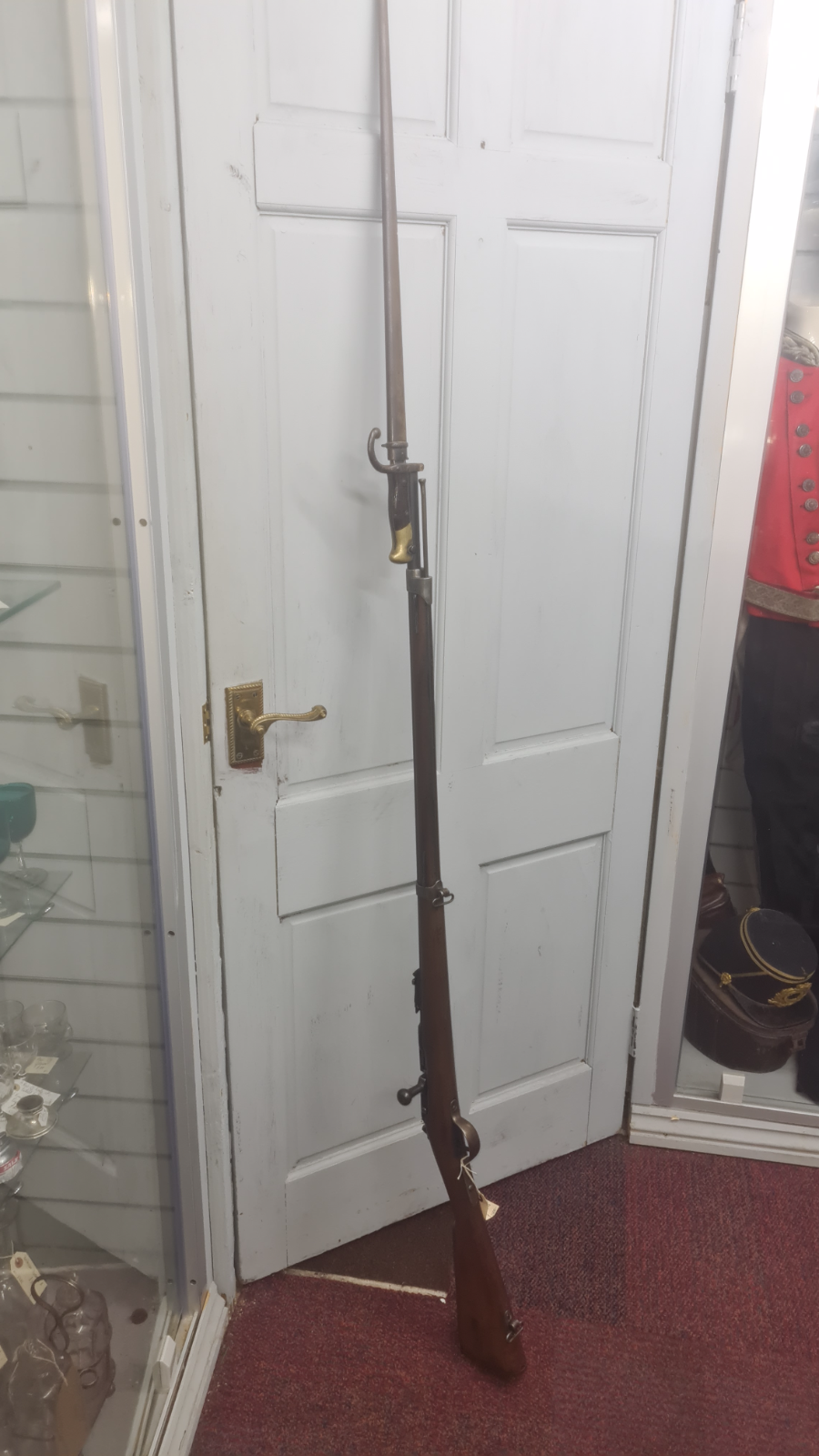
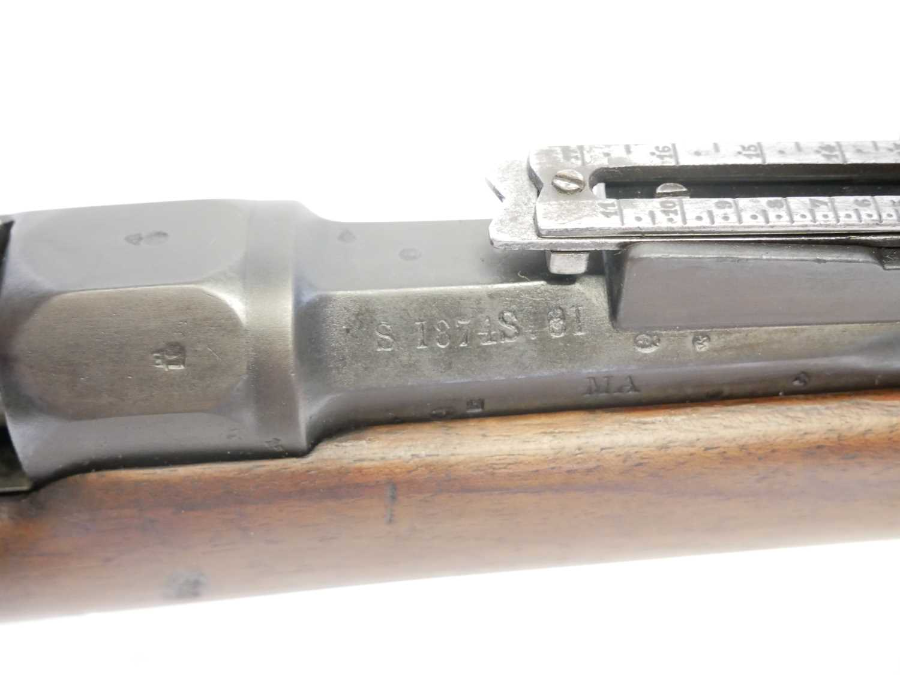
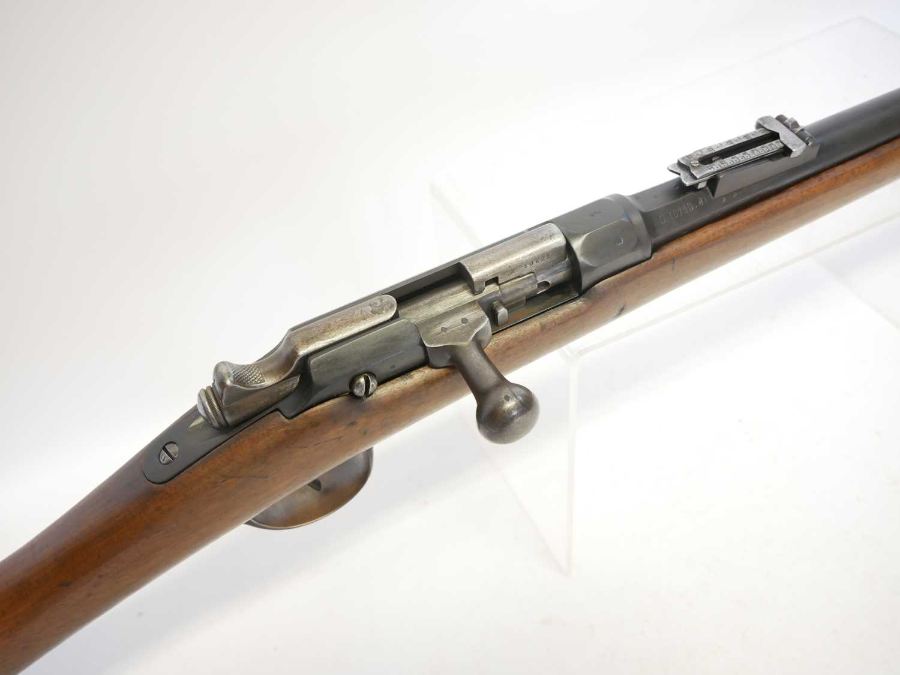
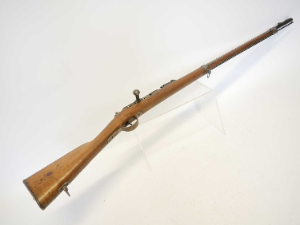
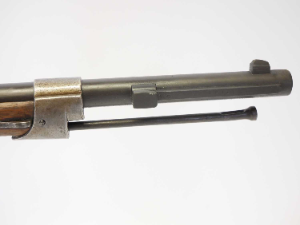
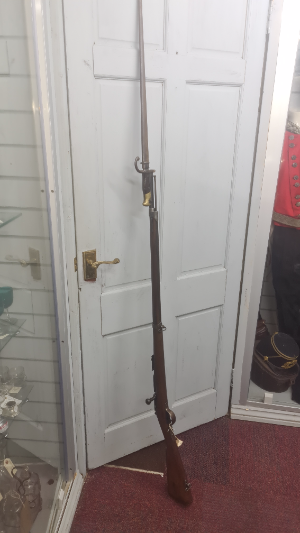
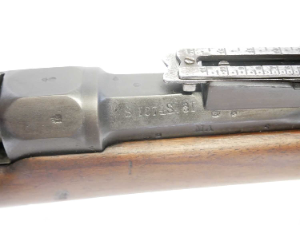
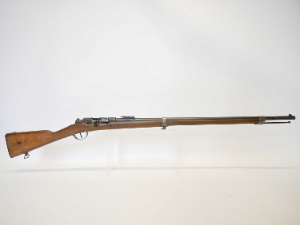
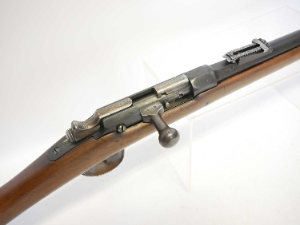
For Sale: A lovely French Gras M.12874, 11mm bolt-action rifle with a serial number of 47182 with bayonet. Features a 32-inch barrel equipped with a folding ladder sight and bayonet bar, secured by two bands. Has a St. Etienne arsenal mark and was issued in 1874. Originally a Chassepot action; the receiver is marked Mle.1866-74. Matching numbers can be found on the receiver and stock. In mint condition. Firing pin complete.
Including gras bayonet and scabbard.
History:
## History of the French Model 1874 Gras Rifle
The French Model 1874 Gras rifle marked a major milestone in the evolution of nineteenth-century military firearms, becoming France's first standard service rifle chambered for a metallic cartridge. Its development was driven by the lessons learned during the Franco-Prussian War (1870–1871), where the French Army, despite fielding the advanced Chassepot Model 1866 rifle, suffered a decisive defeat at the hands of Prussia. Although the Chassepot possessed excellent range and accuracy, its paper-cartridge ignition system had become obsolete as metallic cartridge technology rapidly matured.
Determined to rebuild its military strength and recover the lost provinces of Alsace and Lorraine, France embarked upon an extensive programme of rearmament immediately after the war. Between 1872 and 1873, the French military conducted comprehensive trials to identify a suitable metallic-cartridge replacement for the Chassepot. Rather than discard the approximately 1.5 million Chassepot rifles already in service, the Army initially sought a system that could convert existing rifles while maintaining as many original components as possible.
Among the numerous designs submitted, the system developed by Captain Basile Gras, an officer of the French Artillery, proved the most successful. Although his conversion was more expensive than many competing proposals, requiring an entirely new bolt together with either substantial barrel modifications or complete barrel replacement, the testing commission concluded that the finished rifle was so thoroughly improved that it was effectively equivalent to a newly manufactured firearm. An additional advantage was financial: because Captain Gras designed the rifle while serving as a military officer, the French government retained ownership of the design and avoided paying expensive patent royalties that would have accompanied a civilian invention.
Before adoption, the Gras underwent rigorous military testing. Proof trials demonstrated exceptional strength for a black-powder firearm. Among the most remarkable tests was firing the rifle with six bullets intentionally stacked within the barrel and a massive 540-grain charge of black powder. The rifle survived these extreme conditions, while additional endurance and reliability trials confirmed the action's durability and suitability for military service.
The Gras was officially adopted as the Fusil Modèle 1874 in 1874, although large-scale production began in 1875. Manufacture continued until 1884, during which approximately 3.5 million infantry rifles were produced. Together with the various cavalry carbines, Gendarmerie carbines, artillery musketoons and specialist colonial models, total production exceeded four million firearms, making the Gras one of the most numerous European military rifles of its era.
Production consisted of both newly manufactured rifles and conversions of existing Chassepots. Converted rifles were designated **Modèle 1866–74**, retaining much of the original receiver and stock while incorporating the new metallic-cartridge mechanism. Newly manufactured rifles bore the simpler designation **Modèle 1874**. Converted examples often retained two inspection roundels on the stock: the original Chassepot acceptance stamp and a second roundel recording acceptance following conversion to the Gras system.
Mechanically, the Gras represented a substantial improvement over its predecessor. Captain Gras introduced an entirely new bolt incorporating a removable bolt head and a cock-on-opening action. Unlike the Chassepot, which required the striker to be manually re-cocked before the bolt could be opened, the Gras automatically cocked the firing mechanism as the bolt handle was raised, greatly simplifying operation. A robust spring-steel extractor further improved reliability and ease of maintenance.
The barrel arrangements varied according to the method of manufacture. Many converted rifles initially retained modified Chassepot barrels, although the deeper chamber originally required for the paper-cartridge system resulted in excessive freebore that could adversely affect accuracy. Consequently, large numbers of rifles were later re-barrelled during arsenal refurbishment programmes. These replacement barrels frequently bear later manufacture dates, reflecting the continuing maintenance and improvement of the French Army's rifle inventory throughout the 1880s.
In 1880, French ordnance authorities introduced an important safety improvement known as the **M.80 modification**. Experience had shown that, should a metallic cartridge rupture, escaping gases could travel rearwards along the bolt and towards the shooter's face. To remedy this, armourers machined a relief cut into both the receiver and the bolt head, redirecting escaping gases safely out of the side of the action. Most rifles remaining in military service subsequently received this upgrade, making unmodified examples comparatively uncommon today.
The Gras family included several specialised variants tailored to different branches of military service. The cavalry carbine featured a shortened barrel, bent bolt handle and omitted the bayonet lug, recognising that cavalrymen already carried edged weapons. Approximately 230,000 were produced. The Gendarmerie carbine retained the shorter dimensions but incorporated a bayonet fitting for foot gendarmes, with around 162,000 manufactured. Artillery crews received the compact Mousqueton d'Artillerie, of which more than 300,000 examples were produced, while a scarce African rifle was manufactured in limited numbers—approximately 12,000—for colonial cavalry service.
Despite its enormous production, the Gras never fought the major European conflict for which it had been designed. France expected another war with Germany to reclaim Alsace and Lorraine, but this anticipated conflict did not occur before firearms technology advanced once again. Instead, the Gras saw extensive service throughout the French colonial empire, including North Africa, Indochina and with the French Foreign Legion. As more modern rifles entered service, the vast stocks of Gras rifles were distributed throughout the world, equipping colonial forces, allied governments and numerous secondary military organisations.
The Gras remained France's principal service rifle until the introduction of the Lebel Model 1886. The arrival of smokeless powder revolutionised military small arms, rendering all contemporary black-powder rifles obsolete almost overnight. Nevertheless, the Gras continued to serve for many years in reserve formations, colonial units and auxiliary forces, demonstrating the soundness of its design.
Today, the Model 1874 Gras is widely regarded as one of the finest examples of the transitional single-shot military rifles of the late nineteenth century. Combining the reliability of metallic cartridges with a strong and durable bolt-action mechanism, it bridged the technological gap between the paper-cartridge era of the Chassepot and the repeating smokeless-powder rifles that would dominate modern warfare.
History courtesy of Forgotten Weapons.
Frequently Asked Questions
Who designed the Gras rifle?
The rifle was designed by Captain Basile Gras, an officer in the French Artillery. Because the design was produced during his military service, the French government retained ownership of the design and did not have to pay patent royalties.
What is the Model 1880 (M.80) modification, and how can I tell the difference?
The Model 1880 (M.80) modification was introduced by the French Army in 1880 to improve the safety of the Gras rifle. During service, it was discovered that if a metallic cartridge case ruptured upon firing, escaping gases could be directed rearwards along the bolt towards the shooter's face.
To remedy this, French armourers machined a gas-relief channel into both the receiver and the bolt head. This redirected escaping gases safely out of the side of the action rather than back towards the shooter. Most Gras rifles remaining in military service were subsequently upgraded to this standard.
The easiest way to identify an M.80 rifle is by examining the receiver and bolt head. An upgraded rifle will have a visible gas-relief cut on the right-hand side of the receiver immediately behind the chamber, together with a corresponding relief cut on the bolt head. Many rifles are also stamped "M.80" on the barrel or receiver, although the presence of the gas-relief cuts is the definitive identifying feature.
Unmodified Gras rifles lack these relief cuts and are considerably less common today, as the majority were upgraded during French arsenal refurbishment programmes. There is no difference with the bolt and mechanism design between a Mle 74 and Mle 80.
What does "Mle 1866–74" mean?
This marking indicates that the rifle began life as a Chassepot Model 1866 before being converted to the Gras metallic-cartridge system.
Digital Shop Viewer
Seller Details
VISIT SELLERS SHOPTAKE SHOP TOUR
- Business Name: Raven Yard Antiques Shop
- Name: Jan
- Email: Enquiries@raven-antiques.com
- Phone: 07454992481
- Website: https://raven-antiques.com
- Address:
- 21 Watergate, Whitchurch, Shropshire, UK.
- SY131DP
- Interested in Seeing Other Antique Shops Nearby?
- Note:
- Raven Yard Antiques Shop is a family run business located in the picturesque part of Shropshire in the Roman town of Whitchurch. We have a diverse selection of rare and historic goods to choose from. Please browse our online store or else visit our shop to see some of our amazing items.
Legal Note
For antique firearms such as muskets and rifles, this item is offered strictly as a collectors’ piece. It is sold as a historic firearm for display or study purposes only, and not as a modern, live-firing weapon. Export, import, and ownership regulations vary by country; buyers are responsible for ensuring compliance with their local laws and confirming that they are not prohibited from ownership. In accordance with UK guidelines, the seller is required to verify the buyer’s identification and age prior to completion of the sale. By purchasing antique weapons, the buyer is also consenting that they are not on a prohibited person register.
Newest Items.
SEE MORE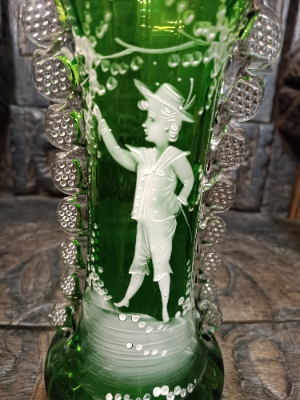
Product ID: 8810
A Large Mary Gregory Green Vase, For Sale
Buy It Now: £45.00
Product ID: 8809
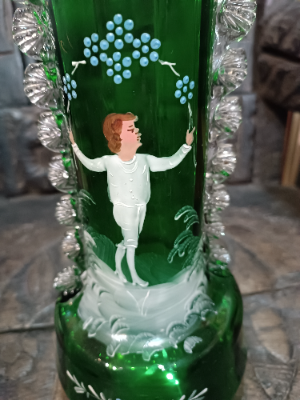
A Large Mary Gregory Green Vase, For Sale
Buy It Now: £45.00
Product ID: 8808
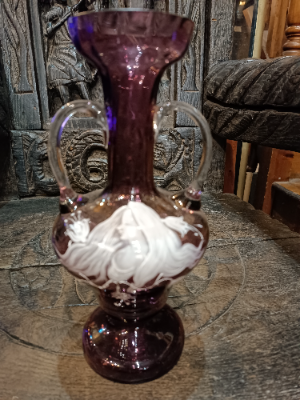
A Mary Gregory Amethyst Vase With 2 Hand..., For Sale
Buy It Now: £50.00
Product ID: 8807
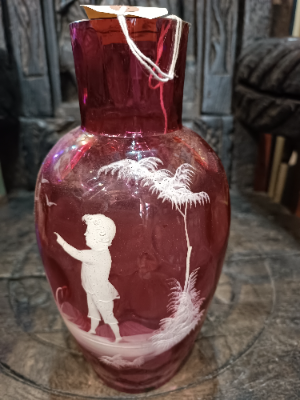
A Large Mary Gregory Cranberry Glass Vas..., For Sale
Buy It Now: £45.00
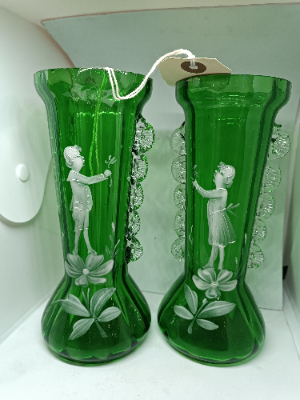
Product ID: 8806
A Pair Of Mary Gregory Green Vases, For Sale
Buy It Now: £30.00
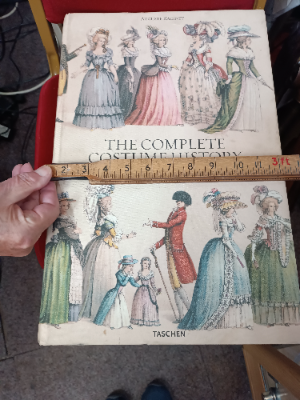
Product ID: 8805
A Very Large The Complete Costume Histor..., For Sale
Buy It Now: £300.00
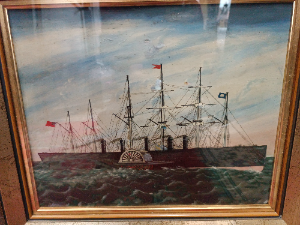
Product ID: 8804
An Oil Painting Of Great Eastern Ship On..., For Sale
Buy It Now: £130.00
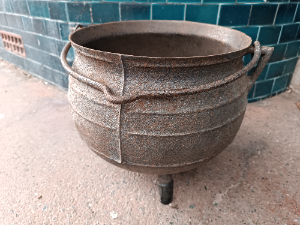
Product ID: 8803
A Medium Size Cast Iron Cauldron, For Sale
Buy It Now: £100.00