Interior Decoration Generator
Use our AI-powered visualisation tool to see how furniture and décor could look in your home. Upload a photo of your room and the system will place the selected item into the scene.
Experiment with interior design ideas before making a decision and see how pieces may work with your room’s space, lighting, and style.
A free account is required so we can securely process your images and save your visualisations for later comparison.
Images are generated using AI and are intended as a visual guide only. Colours, proportions, and placement may not be perfectly accurate.
Login/Create a free account to continue

Choose Up To 4 Antiques
Select a type, period, and item for each slot. Your AJAX-loaded item preview appears immediately, and the full room renders below when the user clicks generate. This visualisation is generated using AI and is intended as a guide only. Placement, scale, and appearance may not be 100% accurate.

Description 🔉
A lovely example of a blackened Type II Second Pattern Fairbairn-Sykes Commando Knife, dating from 1942–43. No scabbard.
History:
The Second Pattern Fairbairn-Sykes was introduced by Wilkinson Sword on 12 August 1941, replacing the original First Pattern with a somewhat simplified design better suited to wartime mass production. The principal changes included a straight rather than S-shaped crossguard, removal of the First Pattern ricasso and modifications to the brass grip.
The First Pattern had originally employed a finely machined grip turned from solid brass stock. With brass designated a strategically important material, Wilkinson moved towards cast grips, allowing greater control over the amount of brass used. A small internal void was incorporated around the palm swell, conserving material without significantly affecting the weight or balance of the knife. It is worth noting that this change may actually have begun during late First Pattern production, although it was certainly incorporated into the Second Pattern.
The blade remained hand-ground, but the First Pattern's distinctive square ricasso was eliminated and the grind continued towards the shoulder of the blade. The labour-intensive S-shaped crossguard was likewise abandoned in favour of a simple straight guard. Together these changes reduced manufacturing time while retaining the essential characteristics of the original design.
The scabbard evolved alongside the knife. The First Pattern press-stud retaining strap was replaced by the familiar elastic retaining strap, while later Type II scabbards adopted a darkened chape. The earlier rounded chape was simplified to a flat-bottomed form, although transitional examples are known using older rounded chapes which were simply blackened and used up during production.
The Second Pattern appeared in three principal finish types. Type I retained the bright polished and plated appearance of the early knives; the much scarcer Type II was blacked/blued throughout; and Type III combined a blued hilt with a polished blade.
Wilkinson documentation records the introduction of the “Black Finish” on a contract dated 6 February 1942. The resulting Type II, as represented by this example, had an all-over subdued blacked/blued finish with no bright reflective surfaces—a significant departure from the highly polished early F-S knives. Original Wilkinson etched Type II examples are regarded as particularly scarce.
Production of the Second Pattern was not confined to Wilkinson. As demand increased, the Ministry of Supply sought additional manufacturing capacity, and on 2 October 1942 Wilkinson supplied a complete set of technical drawings so that production could be undertaken by other manufacturers. This helped give rise to the considerable variety of wartime Second Pattern knives encountered today.
The Second Pattern therefore represents one of the most interesting stages in the development of the Fairbairn-Sykes: retaining the quality and distinctive character of the original fighting knife while incorporating practical economies in materials and manufacture demanded by wartime production.
Frequently Asked Questions
When was the second pattern introduced?
The Second Pattern Fairbairn-Sykes fighting knife was introduced in August 1941, replacing the First Pattern after its relatively short production run.
A useful chronology is:
November 1940: First Pattern introduced.
August 1941: Second Pattern introduced, initially retaining a bright blade.
September 1942: blackened/darkened Second Pattern knives begin appearing, intended to reduce reflection during night operations.
October 1942: a major British government order for approximately 38,000 knives was placed.
September 1943: Third Pattern introduced, with the distinctive ribbed cast grip.
How old is this Fairbairn-Sykes Commando Knife?
This is a Second Pattern Fairbairn-Sykes Commando Knife, a pattern introduced in 1941. However, the blackened blade finish seen on this example was introduced around September 1942 to reduce reflection and improve concealment during night operations.
The Third Pattern was introduced in September 1943, so the features of this example suggest a likely production date of late 1942 to 1943.
Digital Shop Viewer
Seller Details
VISIT SELLERS SHOPTAKE SHOP TOUR
- Business Name: Raven Yard Antiques Shop
- Name: Jan
- Email: Enquiries@raven-antiques.com
- Phone: 07454992481
- Website: https://raven-antiques.com
- Address:
- 21 Watergate, Whitchurch, Shropshire, UK.
- SY131DP
- Interested in Seeing Other Antique Shops Nearby?
- Note:
- Raven Yard Antiques Shop is a family run business located in the picturesque part of Shropshire in the Roman town of Whitchurch. We have a diverse selection of rare and historic goods to choose from. Please browse our online store or else visit our shop to see some of our amazing items.
Legal Note
For antique firearms such as muskets and rifles, this item is offered strictly as a collectors’ piece. It is sold as a historic firearm for display or study purposes only, and not as a modern, live-firing weapon. Export, import, and ownership regulations vary by country; buyers are responsible for ensuring compliance with their local laws and confirming that they are not prohibited from ownership. In accordance with UK guidelines, the seller is required to verify the buyer’s identification and age prior to completion of the sale.
Newest Items.
SEE MORE
Product ID: 3682
Indonesian Special Forces Third Pattern..., For Sale
Buy It Now: £275.00
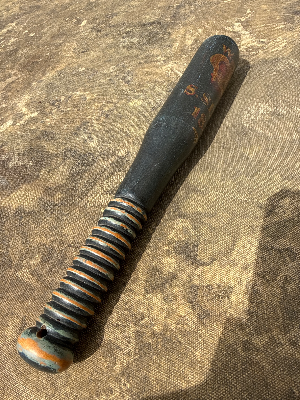
Product ID: 3680
1831 Dated Peelers Police Baton, For Sale
Buy It Now: £225.00
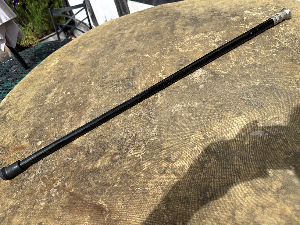
Product ID: 3679
Early 20th Century Silver Plated Sword S..., For Sale
Buy It Now: £250.00
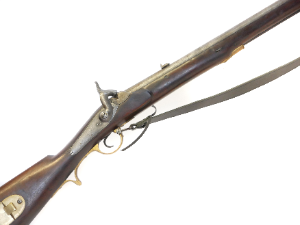
Product ID: 3678
Pattern 1837 Brunswick Rifle, For Sale
Buy It Now: £1550.00
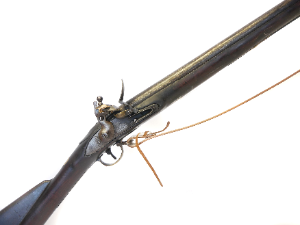
Product ID: 3677
Antique Flintlock Brown Bess Musket By S..., For Sale
Buy It Now: £1200.00
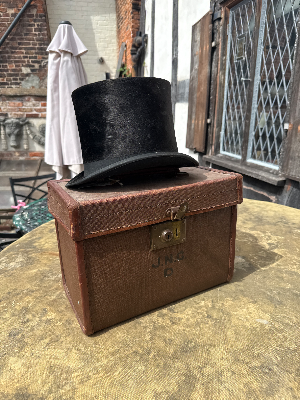
Product ID: 3675
Late Victorian Gentlemans Top Hat And Bo..., For Sale
Buy It Now: £120.00
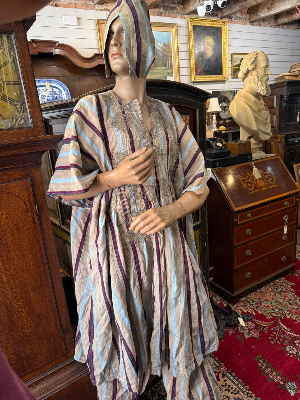
Product ID: 3674
Yoruba Embroidered Strip-Woven Ceremonia..., For Sale
Buy It Now: £295.00
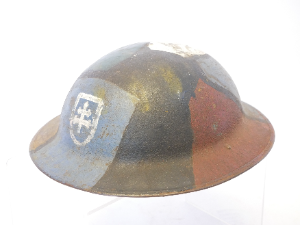
Product ID: 3672
American 79th Division WW1 Brodie Helmet, For Sale
Buy It Now: £395.00