Article
How Jewellery Techniques Evolved and What Was Lost Along the Way
Posted on 19 March 2026 • by RavenYardAntiques
Jewellery has never developed in a straight line. While modern methods offer precision and consistency, historical sources suggest that earlier craftsmen possessed techniques and knowledge that were, in some cases, more advanced than what followed.
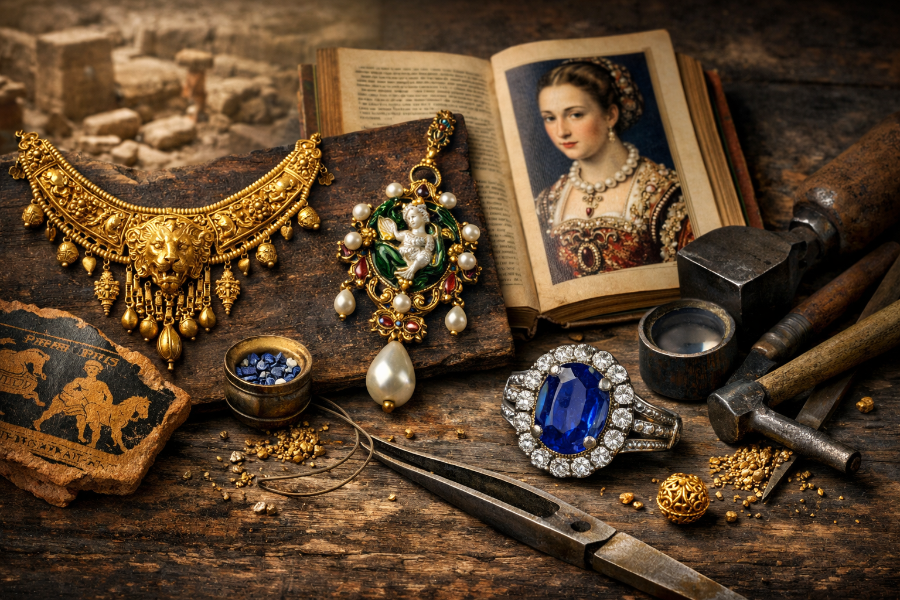
Nineteenth-century jewellers studying ancient work—particularly that of the Greeks and Etruscans—were struck by a recurring problem: they could admire the finished objects, but not fully explain how they had been made. The processes used to manipulate gold to such a refined degree appeared, even then, to be partly lost.
This observation challenges the common assumption that craftsmanship simply improves over time. In reality, periods of decline and rediscovery are evident. After reaching a high point in antiquity, jewellery techniques appear to have deteriorated during later periods, particularly when emphasis shifted from workmanship to the intrinsic value of materials. In some cases, gold was treated with far less refinement, suggesting a loss of technical skill rather than progress.
One of the most revealing areas is enamel work. In ancient jewellery, enamel was typically applied with restraint, often confined within small compartments to create controlled, harmonious designs. The colours—particularly whites, greens, and blues—were noted for their clarity and balance.
Later developments, however, introduced more elaborate and sometimes excessive use of materials, particularly in Byzantine work, where enamel, gemstones, and gold were combined in richer but less restrained compositions.
There is also evidence that certain techniques were entirely forgotten and later rediscovered. For example, variations of enamel work described in historical inventories were no longer understood by later craftsmen, who had to experiment in order to recreate them. This suggests that knowledge was not always passed down consistently, and that some processes disappeared for centuries before being revived. Another important factor in the survival of jewellery is the value of its materials. During the Renaissance, many pieces were destroyed not because they lacked artistic merit, but because the gemstones they contained were too valuable to leave in their original settings. As a result, relatively few original examples survive, and much of what is known about the period comes from painted portraits, where jewellery is depicted in remarkable detail.
These visual records are not simply decorative—they provide reliable evidence of design, construction, and how jewellery was worn. Rings, pendants, and chains appear in portraits with a level of accuracy that allows modern researchers to reconstruct styles that might otherwise have been lost.
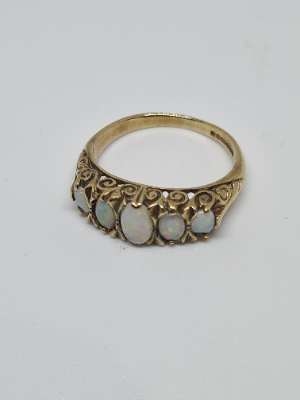
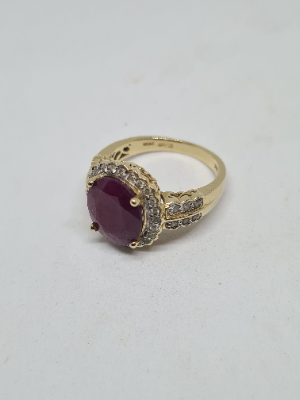
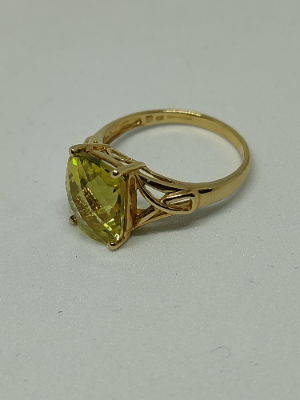
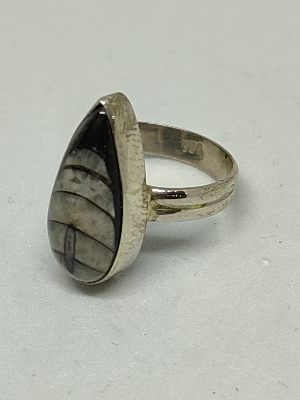
From a structural perspective, even the simplest piece of jewellery reflects a combination of functional elements. A ring, for instance, includes the shank, setting, gallery, and supporting components that together ensure the stone is held securely while allowing light to interact with it. These features are not purely aesthetic; they are essential to how the piece performs in everyday use.
Taken together, these sources show that jewellery is not merely decorative, but the result of evolving knowledge. Techniques have been refined, forgotten, and rediscovered across different periods, while materials and design have been shaped by both practical needs and changing tastes.
Understanding jewellery, therefore, requires more than recognising its materials. It involves recognising the history of its making—what was known, what was lost, and what has been rediscovered over time.
Nineteenth-century jewellers studying ancient work—particularly that of the Greeks and Etruscans—were struck by a recurring problem: they could admire the finished objects, but not fully explain how they had been made. The processes used to manipulate gold to such a refined degree appeared, even then, to be partly lost.
This observation challenges the common assumption that craftsmanship simply improves over time. In reality, periods of decline and rediscovery are evident. After reaching a high point in antiquity, jewellery techniques appear to have deteriorated during later periods, particularly when emphasis shifted from workmanship to the intrinsic value of materials. In some cases, gold was treated with far less refinement, suggesting a loss of technical skill rather than progress.
One of the most revealing areas is enamel work. In ancient jewellery, enamel was typically applied with restraint, often confined within small compartments to create controlled, harmonious designs. The colours—particularly whites, greens, and blues—were noted for their clarity and balance.
Later developments, however, introduced more elaborate and sometimes excessive use of materials, particularly in Byzantine work, where enamel, gemstones, and gold were combined in richer but less restrained compositions.
There is also evidence that certain techniques were entirely forgotten and later rediscovered. For example, variations of enamel work described in historical inventories were no longer understood by later craftsmen, who had to experiment in order to recreate them. This suggests that knowledge was not always passed down consistently, and that some processes disappeared for centuries before being revived. Another important factor in the survival of jewellery is the value of its materials. During the Renaissance, many pieces were destroyed not because they lacked artistic merit, but because the gemstones they contained were too valuable to leave in their original settings. As a result, relatively few original examples survive, and much of what is known about the period comes from painted portraits, where jewellery is depicted in remarkable detail.
These visual records are not simply decorative—they provide reliable evidence of design, construction, and how jewellery was worn. Rings, pendants, and chains appear in portraits with a level of accuracy that allows modern researchers to reconstruct styles that might otherwise have been lost.
From a structural perspective, even the simplest piece of jewellery reflects a combination of functional elements. A ring, for instance, includes the shank, setting, gallery, and supporting components that together ensure the stone is held securely while allowing light to interact with it. These features are not purely aesthetic; they are essential to how the piece performs in everyday use.
Taken together, these sources show that jewellery is not merely decorative, but the result of evolving knowledge. Techniques have been refined, forgotten, and rediscovered across different periods, while materials and design have been shaped by both practical needs and changing tastes.
Understanding jewellery, therefore, requires more than recognising its materials. It involves recognising the history of its making—what was known, what was lost, and what has been rediscovered over time.