Article
Whats It Worth ? Valuing Antiques
Posted on 24 December 2025 • by Abbott Antiques & Collectables
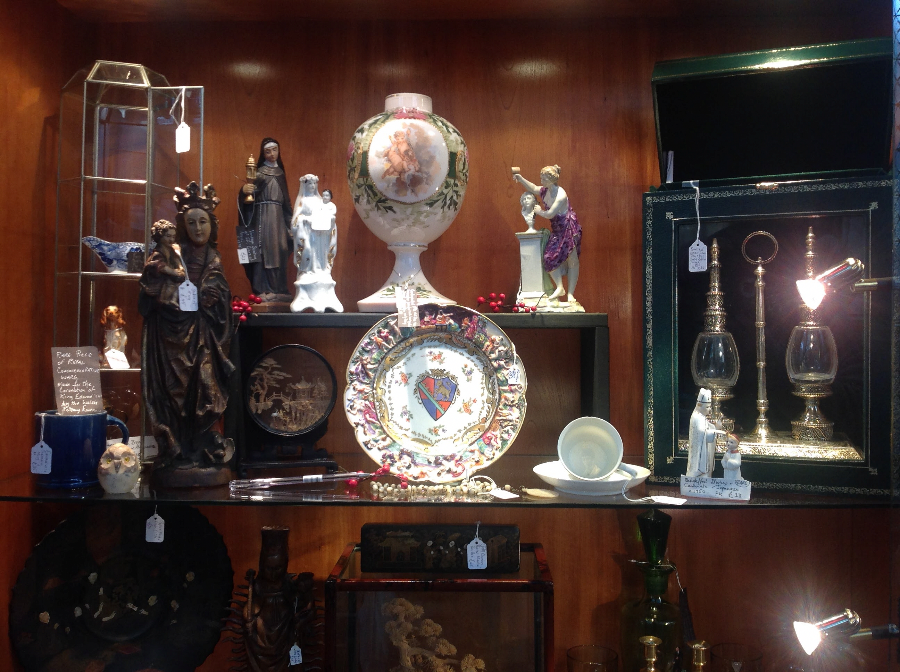
In the last half a century, here has been a significant change in the approach to Antiques, both from a public and a professional perspective. Formerly the appreciation was predominantly from the angle of collecting, whereas, currently the interest is more on the value of an item. One has only to watch the BBC's 'The Antiques Road Show' to appreciate the delight or misery when an expert delivers a valuation, to understand the switch in thinking ! There are few who declare that the price is irrelevant and love the piece for what it is or the place it occupies in their life or family history.
People often ask, quite rightly, how Antique Dealers arrive at a selling price, more often when the cost seems ridiculously expensive. The truth is, most rush to check the price on 'selling platforms' like Etsy and eBay, which is reasonable but, to my mind, a mistake. These are principally buyers platforms, mainly trawled by collectors who, more often, are inclined to pay what it is worth to them, and often paying way above its' actual worth. The truth is, quite simply, an Antique item is worth what someone is prepared to pay for it, no more, no less. One person may part with thousands of pounds for a 17th century Icon, whilst someone who is neither religious nor has a inclination for older pieces, wouldn't be so inclined !
Admittedly, there are Internet based professional services which offer lists of the auction house 'hammer prices'. One such platform, amongst others, is 'LiveAuctioneers’, a US Auction Price Results Database, a free research tool for those who want to buy or sell, which has access to over 21 million antique and vintage items, auctioned-off from thousands of world-wide auction houses. Either search by keyword, refine by auction house, location, origin, style, period; even entering the designer/creator, materials or techniques will generate results. However, it still begs the question of richer versus poorer areas/countries. In the UK, even a cursive glance at 'hammer prices' reveals that items sold in the more affluent 'home counties', London and the South of England often acquire higher prices than the poorer north.
The exception has, historically, been pieces made from gold or silver, which have traditionally sold for, at least, the current market price, by weight, of either commodity, and often above; and yet, in recent years this has not been the case with some items, such as silver tea-sets, which are less desirable and frequently sell even for less than the scrap value or, sadly, remain unsold.
For the better part, it is taste which has swayed the market and investing in Antiques, as a means of securing a reliable source of future income is much more tenuous. However, there may be a glimmer of hope for investors. When considering the value of pieces, there are categories which almost achieve and retain value, namely those of 'rarity, quality and curiosity'. If an item is rare, or of exceptional quality or even curious, it often commands a greater value, increasing with time. Secondly, that a piece has 'provenance', not history as in the American frequent use of the word, but a connection with a notable person. However, we would inject a note of caution here, being the owner of several items connected with the former Prince Andrew, now Andrew Mountbatten-Windsor, that 'a fall from grace' can render a collection worthless almost overnight! Ultimately, whatever argument is proffered, whatever is the fashion or present obsession, it all comes back to the same place - an Antique is only worth what someone is prepared to pay for it.
People often ask, quite rightly, how Antique Dealers arrive at a selling price, more often when the cost seems ridiculously expensive. The truth is, most rush to check the price on 'selling platforms' like Etsy and eBay, which is reasonable but, to my mind, a mistake. These are principally buyers platforms, mainly trawled by collectors who, more often, are inclined to pay what it is worth to them, and often paying way above its' actual worth. The truth is, quite simply, an Antique item is worth what someone is prepared to pay for it, no more, no less. One person may part with thousands of pounds for a 17th century Icon, whilst someone who is neither religious nor has a inclination for older pieces, wouldn't be so inclined !
Admittedly, there are Internet based professional services which offer lists of the auction house 'hammer prices'. One such platform, amongst others, is 'LiveAuctioneers’, a US Auction Price Results Database, a free research tool for those who want to buy or sell, which has access to over 21 million antique and vintage items, auctioned-off from thousands of world-wide auction houses. Either search by keyword, refine by auction house, location, origin, style, period; even entering the designer/creator, materials or techniques will generate results. However, it still begs the question of richer versus poorer areas/countries. In the UK, even a cursive glance at 'hammer prices' reveals that items sold in the more affluent 'home counties', London and the South of England often acquire higher prices than the poorer north.
The exception has, historically, been pieces made from gold or silver, which have traditionally sold for, at least, the current market price, by weight, of either commodity, and often above; and yet, in recent years this has not been the case with some items, such as silver tea-sets, which are less desirable and frequently sell even for less than the scrap value or, sadly, remain unsold.
For the better part, it is taste which has swayed the market and investing in Antiques, as a means of securing a reliable source of future income is much more tenuous. However, there may be a glimmer of hope for investors. When considering the value of pieces, there are categories which almost achieve and retain value, namely those of 'rarity, quality and curiosity'. If an item is rare, or of exceptional quality or even curious, it often commands a greater value, increasing with time. Secondly, that a piece has 'provenance', not history as in the American frequent use of the word, but a connection with a notable person. However, we would inject a note of caution here, being the owner of several items connected with the former Prince Andrew, now Andrew Mountbatten-Windsor, that 'a fall from grace' can render a collection worthless almost overnight! Ultimately, whatever argument is proffered, whatever is the fashion or present obsession, it all comes back to the same place - an Antique is only worth what someone is prepared to pay for it.