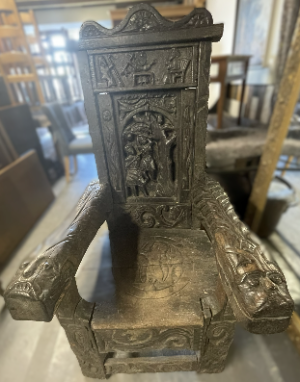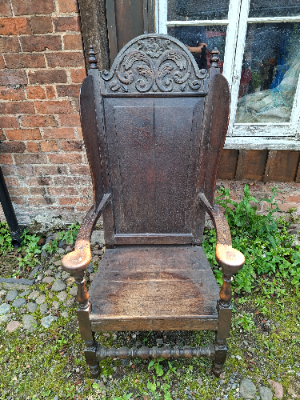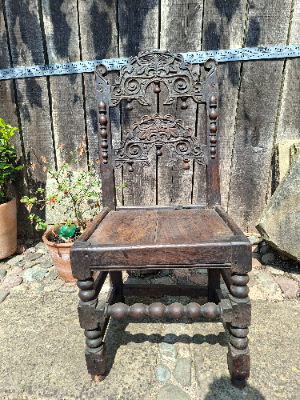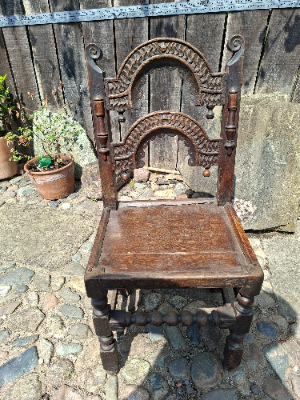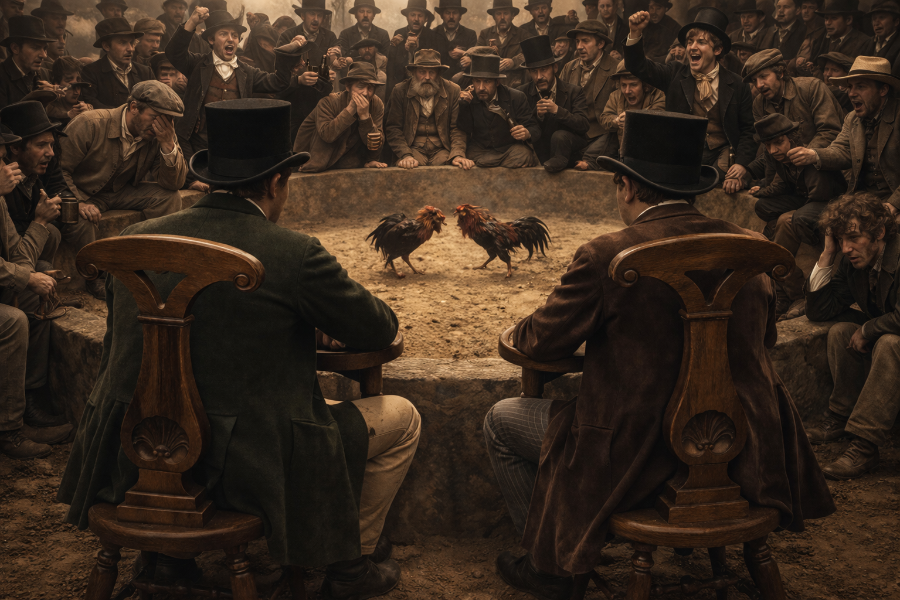
This is a very rare 18th-century cockfighting chair. Using AI, we have attempted to interpret how such a chair may have appeared in use during a cockfight, and the result is remarkably convincing.
Cockfighting chairs were typically made from lighter woods, designed to be portable and easily carried to the arena. They were also multi-functional: they could be used as a standard seat or reversed so that the user could rest against the shaped (or “bearded”) back, leaning forward comfortably to watch the fight unfold. Cockfighting was a popular sport throughout the 18th and early 19th centuries.
Although it was outlawed in the 1840s, it had previously been followed by all levels of society, creating entire supporting industries—much like horse racing today. These included cock breeders, trainers, equipment makers, and even specialists focused on feeding and conditioning the birds to ensure peak performance. The sums involved could be considerable.
During the reign of Queen Anne, for example, wagers of around 100 guineas per match were recorded—equivalent to roughly £95,000 today. To give a sense of the equipment used, Hansons Auctioneers sold a set of cockfighting spurs a few years ago. A recently sold cockfighting spur sold at Hanson’s auctioneers helps convey the harsh reality of the sport—and why it was ultimately outlawed.
Cockfighting chairs were typically made from lighter woods, designed to be portable and easily carried to the arena. They were also multi-functional: they could be used as a standard seat or reversed so that the user could rest against the shaped (or “bearded”) back, leaning forward comfortably to watch the fight unfold. Cockfighting was a popular sport throughout the 18th and early 19th centuries.
Although it was outlawed in the 1840s, it had previously been followed by all levels of society, creating entire supporting industries—much like horse racing today. These included cock breeders, trainers, equipment makers, and even specialists focused on feeding and conditioning the birds to ensure peak performance. The sums involved could be considerable.
During the reign of Queen Anne, for example, wagers of around 100 guineas per match were recorded—equivalent to roughly £95,000 today. To give a sense of the equipment used, Hansons Auctioneers sold a set of cockfighting spurs a few years ago. A recently sold cockfighting spur sold at Hanson’s auctioneers helps convey the harsh reality of the sport—and why it was ultimately outlawed.