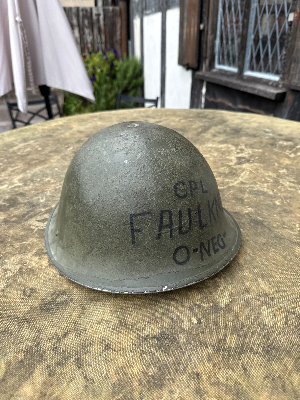
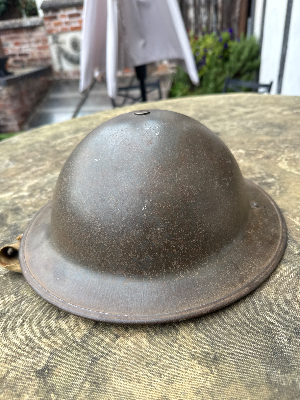
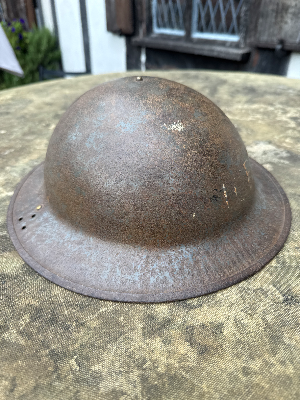
Its not often one obtains a named tunic, let alone a VC tunic. In this example, Captain Arthur Forbes Gordon Kilby VC MC. Captain Arthur Forbes Gordon Kilby VC MC (3 February 1885 – 25 September 1915) was a British Army officer during the First World War and a recipient of the Victoria Cross.
Early Life
Kilby was born on 3 February 1885 in East Hayes, Cheltenham, the only son of Sandford and Alice F. Kilby. He was educated at Bilton Grange near Rugby and later at Winchester College. He graduated from the Royal Military College, Sandhurst, in July 1905 and was commissioned into the South Staffordshire Regiment.
Military Career
He was promoted to Captain on 1 April 1910 at the age of 25. Kilby was fluent in Hungarian and German and was studying Spanish at the outbreak of the First World War in August 1914.
He was deployed to France and Flanders with the British Expeditionary Force, serving with the 2nd Battalion, South Staffordshire Regiment.
Victoria Cross Action
On 25 September 1915, during the first day of the Battle of Loos, Kilby led his company in an attack on enemy positions near Cuinchy along the La Bassée Canal.
Although wounded at the beginning of the attack, he continued to lead his company under heavy machine-gun fire and bombing. He reached the enemy wire but was shot down. Despite severe injuries, including the loss of a foot, he continued to encourage his men and use his rifle.
He was reported missing after the action, and his death was later presumed. His Victoria Cross was awarded posthumously and published in the London Gazette on 30 March 1916.
Citation
“For most conspicuous bravery. Captain Kilby was specially selected at his own request… though wounded at the outset, continued to lead his men right up to the enemy wire under a devastating machine gun fire… although his foot had been blown off, he continued to cheer on his men and to use a rifle.”
— London Gazette, 30 March 1916
Legacy
Kilby’s actions were recognised by German forces, who reportedly erected a memorial cross at the site of his death.
His body was recovered on 19 February 1929 and buried at Arras Road Cemetery, Roclincourt (Plot III, Row N, Grave 27).
Memorials to Kilby include:
Early Life
Kilby was born on 3 February 1885 in East Hayes, Cheltenham, the only son of Sandford and Alice F. Kilby. He was educated at Bilton Grange near Rugby and later at Winchester College. He graduated from the Royal Military College, Sandhurst, in July 1905 and was commissioned into the South Staffordshire Regiment.
Military Career
He was promoted to Captain on 1 April 1910 at the age of 25. Kilby was fluent in Hungarian and German and was studying Spanish at the outbreak of the First World War in August 1914.
He was deployed to France and Flanders with the British Expeditionary Force, serving with the 2nd Battalion, South Staffordshire Regiment.
Victoria Cross Action
On 25 September 1915, during the first day of the Battle of Loos, Kilby led his company in an attack on enemy positions near Cuinchy along the La Bassée Canal.
Although wounded at the beginning of the attack, he continued to lead his company under heavy machine-gun fire and bombing. He reached the enemy wire but was shot down. Despite severe injuries, including the loss of a foot, he continued to encourage his men and use his rifle.
He was reported missing after the action, and his death was later presumed. His Victoria Cross was awarded posthumously and published in the London Gazette on 30 March 1916.
Citation
“For most conspicuous bravery. Captain Kilby was specially selected at his own request… though wounded at the outset, continued to lead his men right up to the enemy wire under a devastating machine gun fire… although his foot had been blown off, he continued to cheer on his men and to use a rifle.”
— London Gazette, 30 March 1916
Legacy
Kilby’s actions were recognised by German forces, who reportedly erected a memorial cross at the site of his death.
His body was recovered on 19 February 1929 and buried at Arras Road Cemetery, Roclincourt (Plot III, Row N, Grave 27).
Memorials to Kilby include:
-
A memorial in St Nicholas’s Chapel, York Minster
-
His name on the war memorial at St Cuthbert’s Church, Peasholme Green, York